


What's Happening?
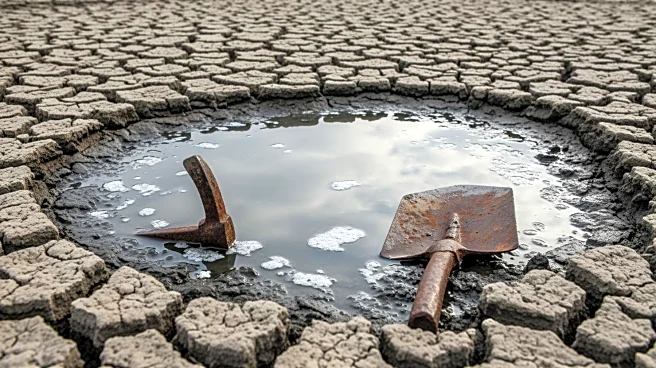
In Bole-3, a community in northeastern Nigeria's Adamawa State, over 500 residents are facing severe water scarcity and contamination issues due to mining operations by a Chinese company. The local stream, once a vital resource for the community, has
become polluted, leading to health problems such as chronic diarrhea and skin rashes among residents. The mining company, which began operations a year ago, constructed a dam to facilitate mineral extraction, significantly reducing the stream's flow and contaminating the water. The community's only borehole has also collapsed, exacerbating the water crisis. Despite attempts to engage with the company for solutions, the community has received no response, leaving residents to rely on less polluted ponds for drinking and cooking.
Why It's Important?
The situation in Bole-3 highlights the broader implications of industrial activities on local communities, particularly in resource-rich regions. The contamination of the stream poses significant public health risks, with elevated levels of heavy metals detected in the water. This not only affects the immediate health of residents but also threatens long-term environmental sustainability. The lack of effective regulatory oversight and corporate accountability exacerbates the vulnerability of such communities, often leaving them without recourse or support. The incident underscores the need for stringent environmental regulations and corporate responsibility to prevent similar occurrences in other regions.
What's Next?
The community of Bole-3 is in urgent need of intervention to address the water contamination crisis. Immediate steps include the provision of alternative safe water supplies and medical screening for affected residents. There is also a need for confirmatory lab testing to assess the full extent of contamination. The situation calls for government intervention to ensure the mining company complies with environmental standards and provides necessary reparations to the community. Additionally, long-term solutions such as implementing cost-effective water purification methods and improving infrastructure are essential to prevent future crises.
Beyond the Headlines
The Bole-3 water crisis raises ethical questions about the responsibilities of multinational companies operating in developing regions. It highlights the potential for exploitation and environmental degradation when profit motives overshadow community welfare. The incident also reflects broader global challenges in balancing economic development with environmental protection. As resource extraction continues to be a significant economic driver, there is a pressing need for international frameworks that ensure sustainable practices and protect vulnerable communities from the adverse effects of industrial activities.