







What's Happening?
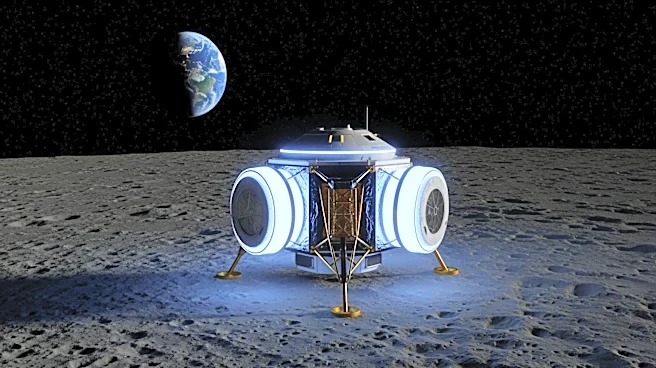
NASA has outlined its comprehensive plan to establish a lunar base in the Moon's South Pole region, aiming for a sustained human presence. The plan is divided into three phases: scouting, early habitation, and sustained human presence. Initially, NASA will
conduct a series of robotic missions to scout the area and test technologies. This will be followed by the deployment of semi-permanent infrastructure and logistics operations by 2029, including solar and nuclear power systems. The final phase will involve routine crew rotations and continuous surface activity, with semi-permanent habitation modules and pressurized rovers for exploration.
Why It's Important?
The establishment of a Moon base is a significant step in space exploration, potentially paving the way for future missions to Mars. It represents a major advancement in human capability to live and work in extraterrestrial environments. This initiative could lead to scientific discoveries about the Moon's origins and resources, and it may also stimulate technological innovations and international collaborations. The project could have economic implications, potentially creating new industries and job opportunities related to space exploration and technology.
What's Next?
As NASA progresses through the phases, it will likely face challenges related to technology development, international collaboration, and funding. The success of the initial robotic missions will be crucial in setting the stage for subsequent phases. Stakeholders, including international space agencies and private companies, may play significant roles in supporting and advancing the project. The outcomes of these efforts could influence future space policy and exploration strategies.