
What's Happening?
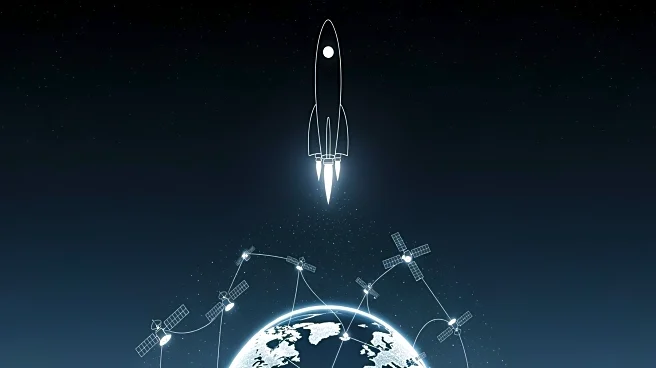
On December 17, 2025, Arianespace successfully launched an Ariane 6 rocket, placing two Galileo satellites into orbit for the European Space Agency (ESA). The launch took place at 5:01 a.m. UTC, and the satellites were
inserted into a medium Earth orbit at an altitude of approximately 22,922 kilometers. This mission supports Europe's navigation satellite system, which provides positioning and timing services used by billions of devices worldwide. The launch is part of ongoing efforts to enhance the Galileo system, which is crucial for various applications, including navigation, telecommunications, and scientific research.
Why It's Important?
The successful deployment of the Galileo satellites is significant for several reasons. Firstly, it strengthens Europe's autonomy in satellite navigation, reducing reliance on other global systems like the U.S. GPS. This independence is crucial for strategic and security reasons. Additionally, the Galileo system underpins a wide range of services that are integral to modern life, from navigation in smartphones to timing in financial transactions. The enhancement of this system can lead to improved accuracy and reliability of these services, benefiting industries and consumers alike. Furthermore, the successful launch of the Ariane 6 rocket demonstrates the capabilities of European space technology, potentially boosting the region's competitiveness in the global space industry.
What's Next?
Following the successful launch, the newly deployed Galileo satellites will undergo a series of tests and calibrations before becoming fully operational. These steps are crucial to ensure that the satellites function correctly and integrate seamlessly with the existing constellation. The European Space Agency will continue to monitor the satellites' performance and make any necessary adjustments. In the broader context, this launch is part of a series of planned deployments aimed at expanding and upgrading the Galileo system. Future launches will continue to enhance the system's capabilities, ensuring it meets the growing demands for precise navigation and timing services.