





What's Happening?
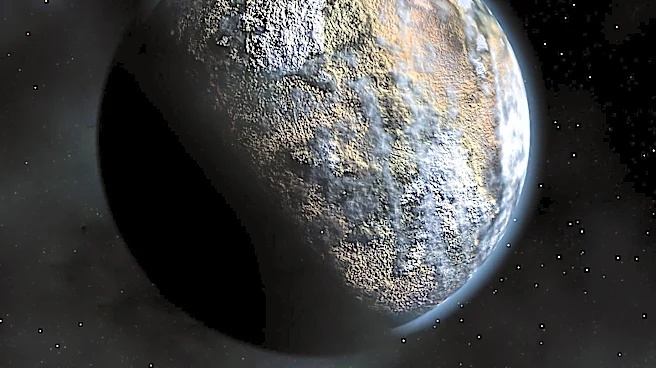
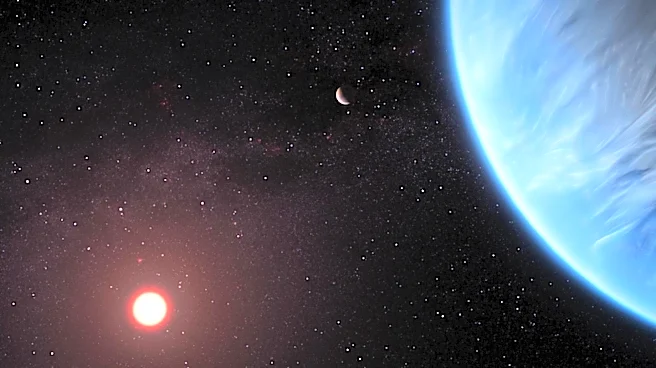
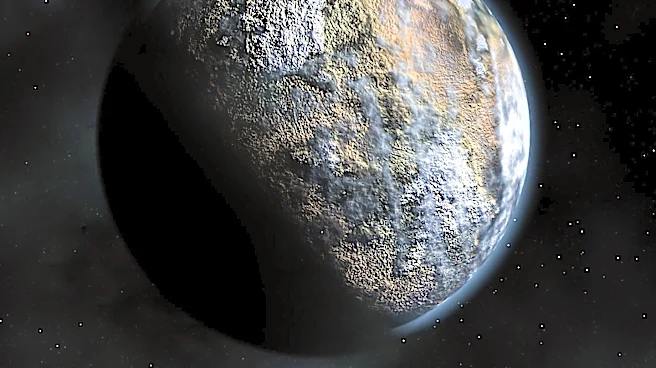
Astronomers have identified an atmosphere on the exoplanet LHS 1140b, a rocky planet located a few dozen light-years from our solar system. This discovery, published in the journal Science, marks the first clear evidence of a potentially habitable planet with
an atmosphere. LHS 1140b orbits within the habitable zone of its star, a region where conditions may allow for liquid water on the planet's surface. The planet, discovered in 2017, is larger and cooler than Earth. The atmosphere is rich in helium, a finding that suggests the planet could retain its atmosphere despite the challenges posed by its proximity to a red dwarf star. This discovery is significant as it reinforces the possibility of other Earth-like planets existing with the necessary conditions to support life.
Why It's Important?
The identification of an atmosphere on LHS 1140b is a significant step in the search for life beyond Earth. It suggests that rocky planets, which are smaller and more difficult to detect than gas giants, can retain their atmospheres. This finding could lead to a better understanding of the conditions necessary for life and the potential for other habitable planets in the universe. The discovery also highlights the importance of studying exoplanets around red dwarf stars, which are common in our galaxy. The presence of an atmosphere on LHS 1140b provides a valuable opportunity to study the planet's climate and potential for habitability, offering insights into the processes that may make a planet suitable for life.
What's Next?
Future observations and studies will focus on further characterizing the atmosphere of LHS 1140b and understanding its potential to support life. Scientists will continue to monitor the planet for changes in its atmospheric composition and investigate the presence of other elements that could indicate biological activity. The discovery of an atmosphere on LHS 1140b opens new avenues for research into the habitability of exoplanets and the search for life beyond our solar system. As technology advances, astronomers will be able to study similar planets in greater detail, potentially leading to the discovery of more Earth-like worlds.