
What's Happening?
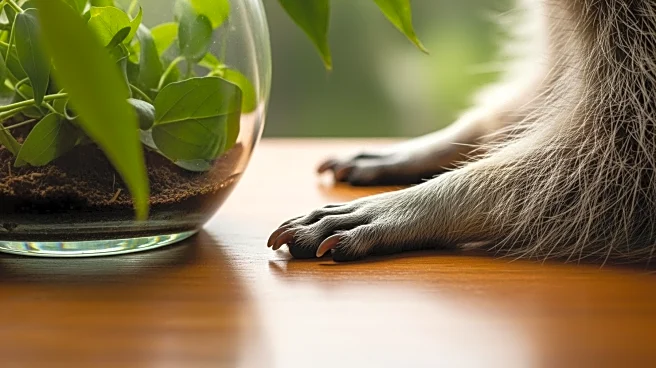
A recent study discussed on NPR's Short Wave podcast explores the possibility of raccoons becoming domesticated pets in the future. The study, led by Raffaela Lesch, examines the early signs of domestication
in raccoons, comparing them to the domestication processes of dogs and cats, which have been companions to humans for millennia. The research suggests that while raccoons are not yet ready to be household pets, they may be on the initial path towards domestication. The study delves into the characteristics that scientists look for when determining the potential for an animal to be domesticated, such as behavioral adaptability and the ability to live alongside humans. The discussion highlights the complexities and timeframes involved in the domestication process, suggesting that raccoons may not be suitable as pets for many generations.
Why It's Important?
The study's findings are significant as they contribute to the broader understanding of animal domestication and its implications for human-animal relationships. If raccoons were to become domesticated, it could lead to new dynamics in pet ownership and animal care industries. This research also raises questions about the ethical considerations of domestication and the impact on wildlife conservation. The potential domestication of raccoons could influence public policy regarding wildlife management and pet ownership regulations. Additionally, it highlights the importance of scientific research in guiding decisions about which animals are suitable for domestication, ensuring that both human and animal welfare are considered.
What's Next?
Future research will likely focus on further understanding the genetic and behavioral traits that could make raccoons suitable for domestication. Scientists may conduct longitudinal studies to observe changes in raccoon populations over time, assessing their adaptability to human environments. Public interest in the topic could lead to increased funding for research and potential pilot programs to explore raccoon domestication in controlled settings. Stakeholders such as wildlife conservationists, pet industry leaders, and policymakers may engage in discussions about the implications of raccoon domestication, considering both the opportunities and challenges it presents.
Beyond the Headlines
The exploration of raccoon domestication touches on broader themes of human interaction with wildlife and the ethical considerations of altering natural behaviors for human benefit. It raises questions about the balance between conservation efforts and the desire for new types of pets. The study also prompts reflection on the historical context of domestication and how modern scientific advancements could accelerate or alter traditional processes. As society continues to evolve, the relationship between humans and animals may shift, leading to new cultural norms and practices in pet ownership.