





What's Happening?
A new analysis from the Lowy Institute indicates that the United States is currently leading China in the race for artificial intelligence (AI) dominance. The report, titled 'China, the United States, and the race for AI dominance,' authored by Jack Sato
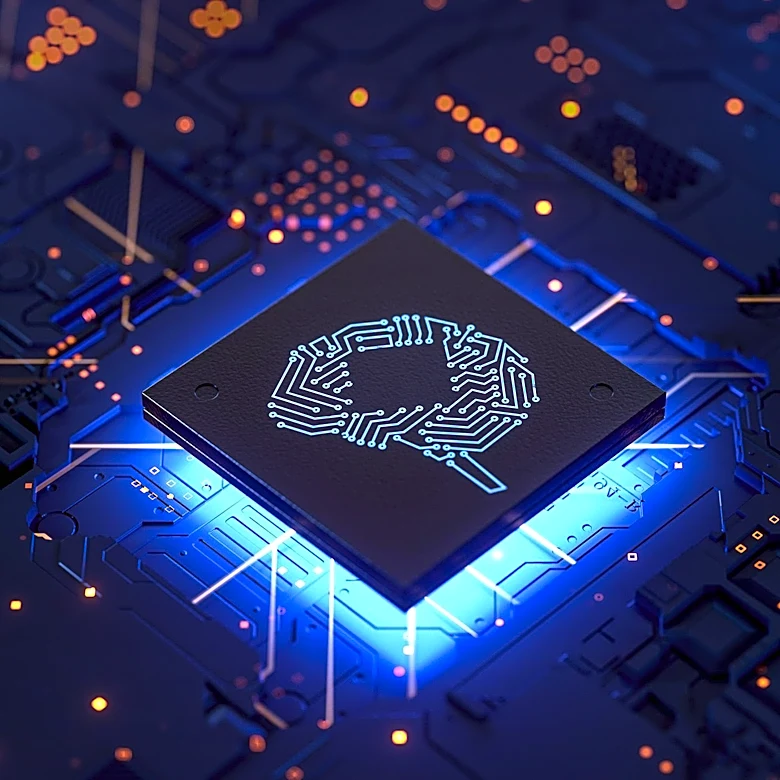
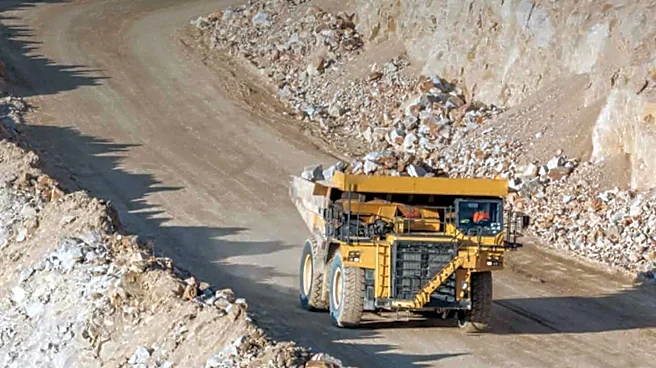
and Hunter Marston, highlights the significant advantage held by the U.S. in computing power and frontier AI models. U.S. data centers possess nearly 40 times the processing power of China's, and its AI chips are 31 times more powerful. Top U.S. AI models consistently outperform China's best, suggesting a six-to-nine-month lead, although this margin is reportedly narrowing. The study also notes the U.S.'s commanding lead in website technology and applications, with most AI users relying on U.S. models, granting the U.S. substantial influence over the technology's global direction. Conversely, China maintains a clear advantage in the production and known reserves of critical minerals, leading in 30 of the 60 minerals deemed critical by the U.S. for its economic and national security.
Why It's Important?
This report underscores the critical role of computing power and advanced AI models in national technological leadership, directly impacting economic competitiveness and national security for the United States. The U.S.'s lead in AI capabilities, particularly in processing power and model adoption, positions it to shape the future trajectory of AI development and its global applications. This dominance can translate into significant economic advantages, fostering innovation, creating new industries, and enhancing productivity across various sectors. However, China's control over critical minerals presents a strategic vulnerability for the U.S., as these minerals are essential for AI supply chains. This dynamic creates a complex geopolitical landscape where technological superiority is balanced against resource dependency. The findings also highlight a global trust deficit in both superpowers regarding AI governance, suggesting an opportunity for middle powers to bridge divides and establish shared foundations for AI regulation.
What's Next?
The U.S. will likely continue to focus on maintaining its lead in AI computing power and model development, potentially through increased investment in research and development, and fostering innovation within its tech sector. To counter its vulnerability in critical minerals, the U.S. is expected to further strengthen cooperation with other countries to secure these resources, as exemplified by its involvement in the Pax Silica framework, a 24-member international initiative focused on AI-related supply chain resilience. This framework aims to diversify supply chains and reduce reliance on any single nation for essential materials. The lack of widespread trust in either the U.S. or China to regulate AI suggests that international efforts towards AI governance will remain fragmented, with regional blocs and middle powers potentially playing a more significant role in shaping future policies and standards.
Beyond the Headlines
The competition in AI extends beyond technological prowess to encompass geopolitical influence and ethical considerations. The U.S.'s lead in AI models, which are widely adopted globally, grants it a unique position to embed its values and standards into the technology's development and deployment. This 'soft power' through technological influence can shape global norms and practices around AI, impacting everything from data privacy to algorithmic fairness. However, China's leverage in critical minerals raises ethical questions about resource control and its potential use as a geopolitical tool. The broader implication is a deepening technological rivalry that could lead to a bifurcated global AI ecosystem, with different standards and applications emerging from each sphere of influence. This could complicate international collaboration on critical issues and potentially exacerbate existing geopolitical tensions.