
What's Happening?
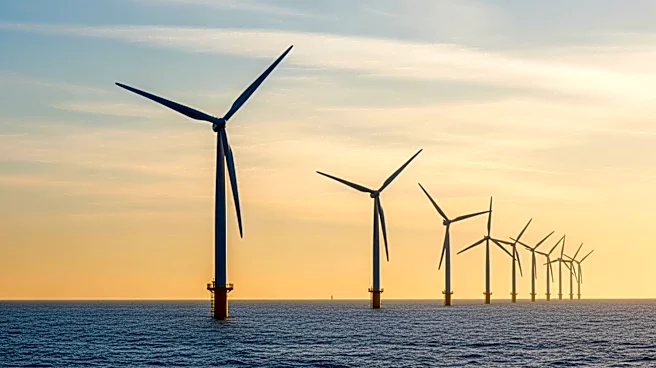
Offshore wind farms are being developed along the East Coast, particularly in Rhode Island, despite opposition from President Trump. The Revolution Wind and Sunrise Wind projects are key developments in this
sector, aiming to supply power to approximately one million homes across Rhode Island, Connecticut, and New York. Revolution Wind is over 90% complete and has started delivering power to New England's grid, with full completion expected this year. Meanwhile, Sunrise Wind is about halfway through its construction. These projects are part of a broader initiative to transition to clean energy, although President Trump has expressed strong opposition to wind power, describing turbines as unsightly. Despite his administration's efforts to halt offshore wind development, including pausing leasing and permitting, the projects continue to progress.
Why It's Important?
The development of offshore wind farms is crucial for the U.S. as it seeks to transition to renewable energy sources and reduce reliance on fossil fuels. These projects are expected to create jobs, contribute to energy independence, and help combat climate change. The opposition from President Trump highlights the political challenges facing renewable energy initiatives. His administration's actions to delay or halt wind energy projects could impact the pace of clean energy adoption and affect utility costs, as demand for electricity continues to rise. The ongoing development of these wind farms, despite political resistance, underscores the growing momentum and necessity for renewable energy solutions in the U.S.
What's Next?
As the Revolution Wind and Sunrise Wind projects near completion, attention will turn to their operational impact and the potential for further expansion of offshore wind energy in the U.S. The Biden administration's support for renewable energy could lead to more projects being approved and developed, countering the previous administration's policies. The legal battles over wind energy policies may continue, influencing the regulatory environment for future projects. Stakeholders, including energy companies and environmental groups, will likely advocate for continued investment in offshore wind as a key component of the nation's energy strategy.