







What's Happening?
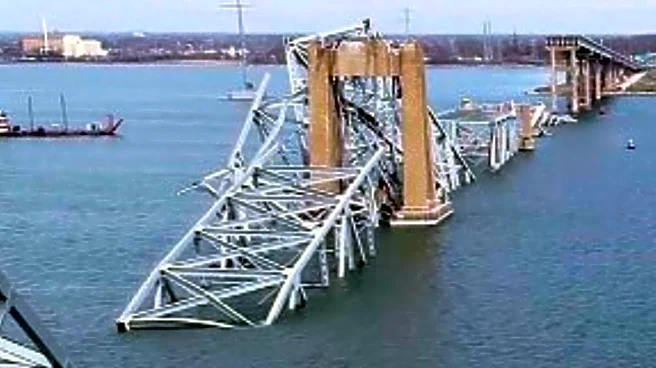
The U.S. Coast Guard has issued a warning that several key U.S. ports are vulnerable to a bridge collapse similar to the incident that occurred in Baltimore. An assessment identified bridge allision as the worst-case scenario for eight major ports across
the nation. These include critical hubs such as Los Angeles/Long Beach and New York/New Jersey, which handle a significant volume of the nation's maritime trade. The warning comes after a comprehensive evaluation of port infrastructure and potential risks, highlighting structural vulnerabilities and operational challenges that could lead to catastrophic failures if a vessel strikes a bridge. The Coast Guard's assessment aims to prompt proactive measures to prevent such incidents and mitigate their potential impact on national supply chains and economic stability.
Why It's Important?
The vulnerability of major U.S. ports to bridge collapses carries significant implications for national security, economic stability, and supply chain resilience. Ports like Los Angeles/Long Beach and New York/New Jersey are vital arteries for international trade, processing millions of tons of cargo annually. A disruption at any of these locations due to a bridge collapse could lead to widespread logistical bottlenecks, increased shipping costs, and delays in the delivery of essential goods. This would directly impact U.S. industries reliant on imports and exports, potentially causing economic losses and job disruptions. Furthermore, such incidents pose severe safety risks to port workers and surrounding communities, underscoring the urgent need for infrastructure upgrades and enhanced safety protocols to protect critical maritime assets.
What's Next?
Following the U.S. Coast Guard's warning, it is anticipated that port authorities and federal agencies will initiate comprehensive reviews of bridge safety protocols and infrastructure at the identified vulnerable locations. This may include detailed structural assessments, implementation of advanced vessel tracking systems, and the development of emergency response plans tailored to bridge allision scenarios. There could also be calls for increased federal funding to upgrade and reinforce critical bridge infrastructure near major ports. Stakeholders, including shipping companies, port operators, and local governments, are expected to collaborate on developing and implementing new safety measures to mitigate risks and ensure the continuous flow of maritime commerce. The focus will be on proactive prevention and rapid recovery strategies to safeguard national economic interests.
Beyond the Headlines
The Coast Guard's warning about vulnerable port bridges extends beyond immediate safety concerns, touching upon broader issues of national infrastructure resilience and long-term investment. The potential for a Baltimore-style collapse at other major ports highlights a systemic challenge in maintaining aging infrastructure amidst increasing maritime traffic and larger vessel sizes. This situation could spark a national debate on the adequacy of current infrastructure funding and the need for a more integrated approach to port security and development. Furthermore, it raises questions about the economic ripple effects of such disruptions, potentially influencing global trade routes and the competitiveness of U.S. ports. The incident could also accelerate the adoption of innovative engineering solutions and smart technologies for infrastructure monitoring and protection, driving advancements in maritime safety and logistics.