






What's Happening?
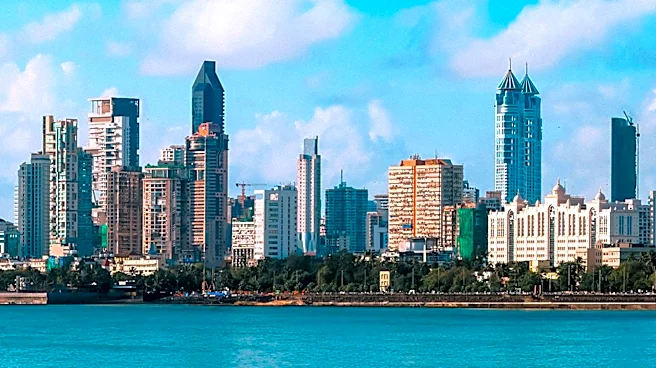
Mumbai, India, is being recognized as a significant center within India's rapidly growing travel and tourism market. The city is characterized by its colonial architecture, vibrant markets, serene beaches, and spiritual sanctuaries, offering a diverse
range of experiences for travelers. Beyond its cultural and natural attractions, Mumbai serves as India's financial hub, boasting luxury hotels and modern event spaces. This makes it a crucial location for business tourism, alongside its strong appeal for spiritual tourism. The broader Indian travel and tourism sector is experiencing substantial growth, driven by a burgeoning economy, increasing domestic and international demand, strategic investments, and digital innovation. This growth is part of a national focus, with the Prime Minister emphasizing travel, trade, and technology as key areas for development.
Why It's Important?
The rise of Mumbai as a prominent travel and tourism destination is indicative of India's broader economic trajectory and its increasing influence on the global stage. As India's financial capital, Mumbai's robust tourism infrastructure, including luxury accommodations and event venues, positions it as a prime location for international business conferences and corporate travel. This directly impacts global businesses seeking to expand into or operate within the Indian market, offering sophisticated facilities for meetings and events. The emphasis on spiritual tourism also highlights a unique cultural offering that attracts a specific segment of international travelers, contributing to the diversification of the global tourism industry. The national focus on 'travel, trade, and technology' by the Prime Minister underscores a strategic governmental effort to leverage tourism as a driver for economic growth, job creation, and international engagement, making India an increasingly attractive market for foreign investment in these sectors.
What's Next?
India's travel and tourism market is poised for continued expansion, with discussions focusing on how to translate its current momentum into global tourism leadership. This will likely involve targeted destination outreach and efforts to enhance seamless and secure mobility for travelers. There is also a growing interest in promoting India as a destination for international students, with initiatives like 'Study in India' potentially being launched to attract students globally. Such programs could lead to increased inbound travel not only from students but also from their families and friends, further boosting the tourism sector. The government's commitment to the '3 Ts' (travel, trade, and technology) suggests ongoing policy support and investment in these areas, aiming to achieve significant growth in tourism by 2047. This sustained focus will likely lead to further development of tourism infrastructure and services across India, including in key cities like Mumbai.
Beyond the Headlines
The growth of Mumbai and India's tourism sector extends beyond mere economic figures, touching upon deeper cultural and societal implications. The promotion of diverse tourism experiences, from colonial architecture to spiritual sanctuaries, helps to showcase India's rich heritage and cultural diversity on a global scale. This can foster greater cross-cultural understanding and appreciation. The emphasis on business tourism in Mumbai also reflects India's increasing integration into the global economy, positioning it as a hub for international commerce and collaboration. Furthermore, the focus on spiritual tourism highlights the enduring significance of India's spiritual traditions and their appeal to a global audience seeking unique and meaningful travel experiences. The government's strategic alignment of tourism with trade and technology indicates a holistic approach to national development, where tourism is not just an industry but a tool for broader economic and diplomatic objectives.