





What's Happening?
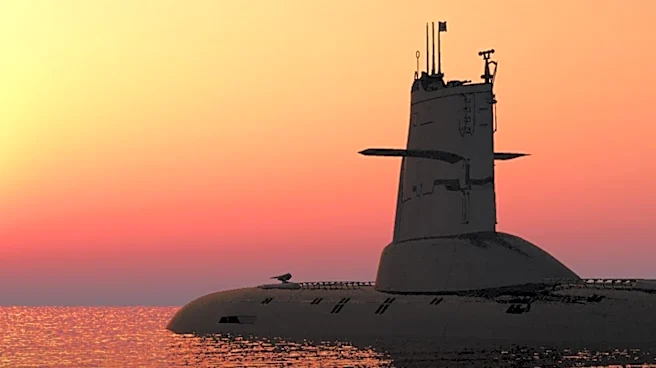
The U.S. Navy's submarine fleet has experienced over 15,000 lost operational days in the last decade due to maintenance delays and downtime, according to a new Government Accountability Office (GAO) study. These delays have resulted in an estimated $3.4
billion in crew and ship costs. The GAO report highlights that government-operated shipyards, responsible for nearly all submarine maintenance, completed only 11% of the work on time over the same period. A significant contributor to this issue is 'inactive idle time,' where submarines awaiting decommissioning spend thousands of days waiting for dry dock space, with crews still required to remain aboard. U.S. Representative Joe Courtney, a ranking member of the House Armed Services committee’s Seapower Subcommittee, acknowledged the delays but stated that the Navy had initiated corrective measures prior to the report's release, and the GAO report does not fully reflect ongoing improvements.
Why It's Important?
These extensive maintenance delays pose a critical challenge to the U.S. Navy's operational readiness and national security. Attack submarines are vital for intelligence gathering and provide a tactical advantage in various missions, making their availability crucial for global combatant commanders. The lost operational days and significant financial costs undermine the Navy's ability to project power and respond to threats effectively, particularly in the context of countering naval expansion by other global powers. The issue also highlights broader industrial base challenges, including a shortage of skilled labor and supply chain disruptions, which affect both maintenance and new submarine construction efforts. Addressing these delays is essential for maintaining the U.S.'s strategic naval capabilities and ensuring the effectiveness of its defense posture.
What's Next?
The Navy is actively working to address these maintenance backlogs and improve efficiency. Efforts include a substantial reduction in supply chain shortages and a 25% increase in maintenance productivity over the past two years. The Navy is also developing a plan for 'waterborne defueling' to free up critical dry dock space. Furthermore, infrastructure improvements are underway at the four government shipyards in New Hampshire, Washington, California, and Hawaii, with potential investments of up to $30 billion for dry dock expansion and upgrades. Electric Boat, a key submarine builder, is investing $100 million annually in training new shipbuilders and plans to hire 8,000 this year, alongside nearly $4 billion in manufacturing improvements over the next five years, to meet aggressive delivery schedules for new submarines.
Beyond the Headlines
The maintenance challenges faced by the U.S. Navy's submarine fleet underscore a long-term consequence of underinvestment in naval shipbuilding and maintenance infrastructure following the Cold War. Decades of reduced spending led to a decline in the skilled manufacturing workforce and a weakening of the supply chain, creating a significant hurdle for current efforts to modernize and expand the fleet. This situation highlights the complex interplay between defense spending, industrial policy, and national security. The Navy's current efforts to recapitalize shipyards and invest in workforce development are not just about fixing submarines; they represent a broader national effort to rebuild critical industrial capabilities and ensure the U.S. maintains its technological and strategic edge in global maritime power. The ethical implications of maintaining crews on 'idle' submarines also raise questions about resource allocation and personnel welfare.