





What's Happening?
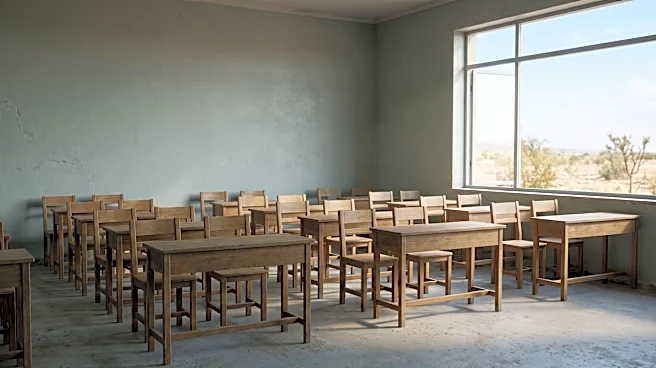
Children in Haiti are confronting severe insecurity, displacement, and hardship as they attempt to attend school, particularly in gang-controlled zones. This situation forces them to risk crossfire and forced recruitment by armed groups. Despite these
dangers, schools remain a vital space for hope, learning, and social reconnection for many children. UNICEF's Representative in Haiti, Geetanjali Narayan, highlighted the dire reality, noting that children are pleading for an end to the gang violence. The crisis has significantly impacted the education system, with over 1,600 schools affected by insecurity in the 2024–2025 school year, disrupting the schooling of more than 240,000 children and affecting approximately 7,500 teachers. In Port-au-Prince, where up to 90% of the capital is under gang control, many schools have either closed, become inaccessible, been destroyed, or are now sheltering displaced families. The journey to school itself is perilous, with incidents like kidnappings of young girls on their way to class causing immense fear among families.
Why It's Important?
The ongoing crisis in Haiti, marked by pervasive gang violence, has profound implications for the nation's future, particularly its youth. The disruption of education due to insecurity not only deprives children of fundamental learning opportunities but also exacerbates trauma and instability. The inability to attend school safely can lead to long-term developmental setbacks, increased vulnerability to exploitation, and a perpetuation of the cycle of poverty and violence. For the U.S., the instability in Haiti contributes to complex humanitarian and immigration challenges. The displacement and hardship faced by Haitian families can lead to increased migration pressures, impacting U.S. border policies and resource allocation. Furthermore, the breakdown of social structures and governance in Haiti poses regional security concerns, potentially fostering environments conducive to illicit activities that could affect U.S. interests. The situation underscores the critical need for international intervention and support to stabilize Haiti and protect its most vulnerable population.
What's Next?
In response to the educational crisis, UNICEF is actively supporting over 174,000 children across Haiti's West, Greater North, and Greater South regions. This support includes distributing school supplies, assisting with enrollment, establishing safe learning environments, and providing psychosocial support. Additionally, UNICEF is training teachers to identify and respond to signs of trauma and is involved in rehabilitating damaged schools. Remedial classes and accelerated learning programs are also being implemented to help children who have been out of school for extended periods reintegrate into the formal education system. These efforts are coordinated with the Ministry of National Education and primarily target public schools. The immediate future will likely see continued humanitarian efforts focused on ensuring educational continuity and safety for children, alongside ongoing calls for international action to address the root causes of gang violence and political instability in Haiti.
Beyond the Headlines
The crisis in Haiti extends beyond immediate educational and safety concerns, touching upon deeper societal and ethical dimensions. The resilience of Haitian families and children, who despite overwhelming odds, cling to the aspiration of education, highlights the profound human desire for normalcy and a better future. This situation also brings to light the ethical responsibilities of the international community to protect vulnerable populations and uphold the right to education in conflict-affected regions. The long-term implications include a potential 'lost generation' if educational disruptions persist, leading to a significant deficit in human capital and hindering future national development. The psychological toll on children exposed to constant violence and displacement is immense, requiring sustained mental health support. Moreover, the crisis underscores the interconnectedness of global challenges, where instability in one nation can create ripple effects, influencing migration patterns, regional security, and international aid priorities.