
What's Happening?
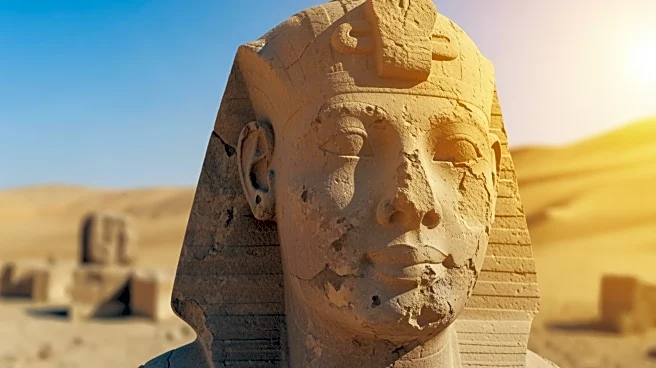
In Luxor, Egypt, two colossal statues of Pharaoh Amenhotep III have been restored and unveiled as part of a long-term renovation project aimed at reviving the historical significance of the area. The statues,
known as the Colossi of Memnon, were reassembled over two decades and are part of efforts to restore the funerary temple of Amenhotep III, who ruled during Egypt's prosperous New Kingdom period. The restoration was led by an Egyptian-German team, highlighting the importance of these statues in Egypt's rich archaeological heritage. The statues, which were toppled by an earthquake around 1200 BC, have been reconstructed using original fragments and now stand as a testament to ancient Egyptian craftsmanship.
Why It's Important?
The unveiling of the restored statues is significant for Egypt's tourism sector, which is a crucial part of the country's economy. The tourism industry has faced challenges due to political instability and the COVID-19 pandemic, but it is now recovering. The restoration of these statues is part of broader efforts to attract more tourists by showcasing Egypt's ancient heritage. The government aims to increase tourist numbers significantly, with projections of 18 million visitors in the current year and hopes to reach 30 million annually by 2032. This initiative not only preserves cultural heritage but also supports economic growth by boosting tourism revenue.
What's Next?
Following the unveiling, the site is expected to become a major attraction for tourists visiting Luxor, complementing other historical sites such as the Karnak temple. The Egyptian government continues to invest in archaeological projects and tourism infrastructure, including the recent opening of the Grand Egyptian Museum near the Giza Pyramids. These efforts are part of a strategic plan to enhance Egypt's global tourism appeal and economic stability. The success of these initiatives will depend on continued international interest and the ability to maintain political and social stability in the region.