


What's Happening?
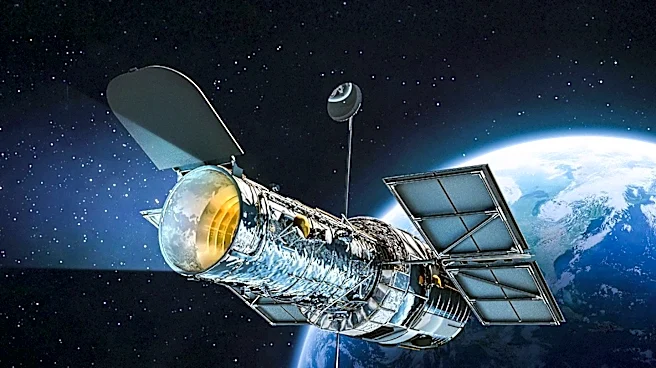
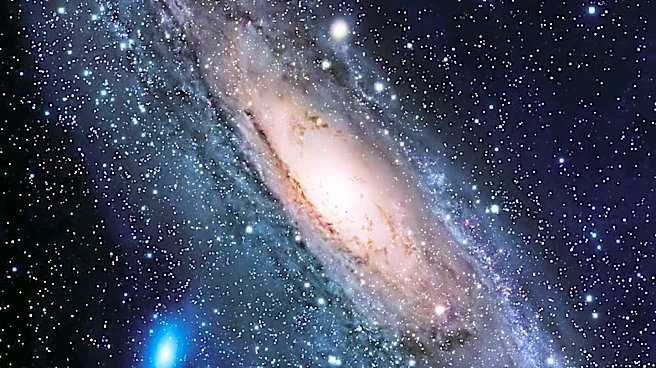
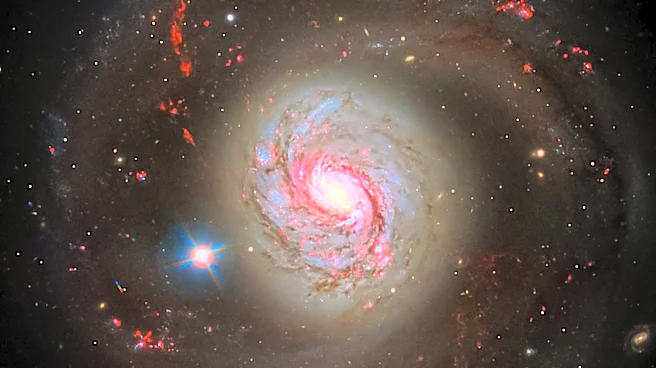
NASA's Hubble Space Telescope has provided a detailed analysis of the Andromeda galaxy, revealing a significant slowdown in its star production over the past 500 million years. This finding suggests that the galaxy is naturally winding down after a period
of heightened activity. The study, published in The Astrophysical Journal, utilized data from two major Hubble surveys that mapped approximately two-thirds of Andromeda's disk, including around 200 million stars. The research indicates that Andromeda's star formation rate has decreased from one solar mass per year 500 million years ago to just one-fifth of a solar mass each year today. The slowdown is primarily concentrated within a ring about 32,000 light-years from the galaxy's center. The study also explored the potential influence of the companion galaxy M32 on this decline, although evidence remains inconclusive.
Why It's Important?
The findings from the Hubble Space Telescope offer valuable insights into the evolution of large spiral galaxies like Andromeda, which is the nearest large spiral galaxy to Earth. Understanding the patterns and rates of star formation is crucial for explaining how galaxies develop and change over time. This research contributes to the broader knowledge of galaxy formation and evolution, providing astronomers with clues about the natural lifecycle of galaxies. The study's implications extend to understanding potential future interactions between Andromeda and the Milky Way, as Andromeda is the only major galaxy moving closer to the Milky Way, potentially leading to a collision in the distant future.
What's Next?
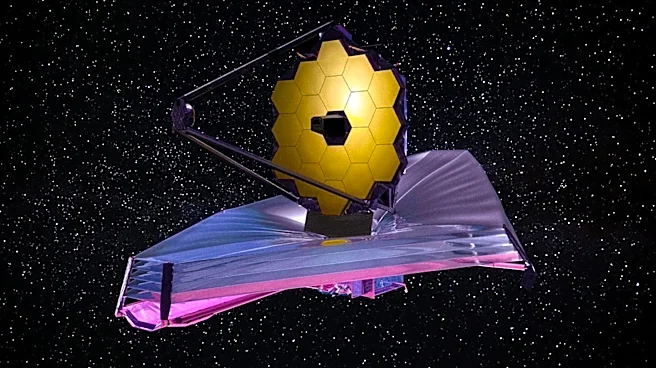
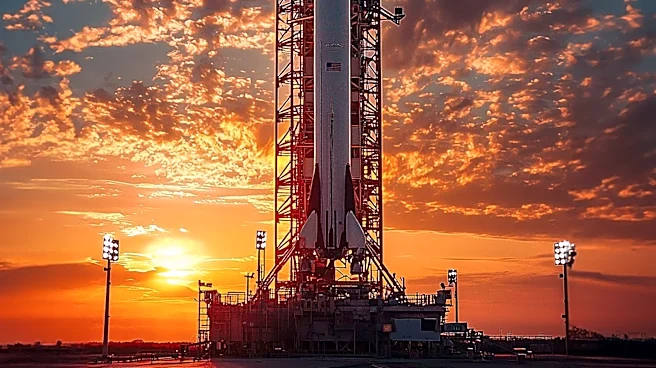
NASA plans to continue studying Andromeda using the Hubble Space Telescope's archive and will soon employ the Nancy Grace Roman Space Telescope, set to launch on a SpaceX Falcon Heavy rocket. The Roman Space Telescope will offer a field of view at least 100 times larger than Hubble's, allowing for unprecedented detail in surveying the entire Andromeda galaxy and its surrounding halo. This upcoming mission is expected to provide further insights into the galaxy's structure and star formation processes, enhancing the understanding of spiral galaxy evolution.