

What's Happening?
Four U.S. lawmakers have reintroduced the CCP Fentanyl Sanctions Act, a bill aimed at sanctioning Chinese entities involved in the illicit trade of fentanyl and its precursor chemicals. The legislation targets chemical manufacturers and ports facilitating
the shipment of these substances, leveraging their exposure to the U.S. banking system. Republican Representatives John Moolenaar and Dan Newhouse, alongside Democrats Ro Khanna and Jake Auchincloss, are sponsoring the bill. Representative Newhouse stated that the Chinese Communist Party must be held accountable for its role in the fentanyl crisis, which has caused over 70,000 American deaths annually at its peak. Historically, Chinese fentanyl makers have operated in both legal and illicit markets, and after China banned fentanyl exports to North America in 2019, many shifted to shipping precursor chemicals to Mexico for synthesis by cartels. Efforts by the U.S. to cooperate with China on drug enforcement have yielded mixed results, with some progress noted but concerns remaining about the reliability of China's policy commitments.
Why It's Important?
This legislative effort underscores the U.S. government's ongoing struggle to combat the fentanyl crisis, which continues to devastate American communities. By targeting Chinese entities through sanctions, the U.S. aims to disrupt the supply chain of illicit fentanyl and its precursors at their source. The bill's focus on Chinese companies' access to the U.S. banking system highlights the significant economic leverage the U.S. possesses and its willingness to use it to address public health and safety concerns. The bipartisan support for the bill indicates a broad consensus in Congress regarding the severity of the fentanyl problem and the need for aggressive action against foreign contributors. The mixed results of past cooperation with China on drug enforcement suggest that a more assertive, sanctions-based approach is being considered as a necessary alternative or supplement to diplomatic efforts. This could set a precedent for how the U.S. addresses other transnational criminal activities linked to foreign actors.
What's Next?
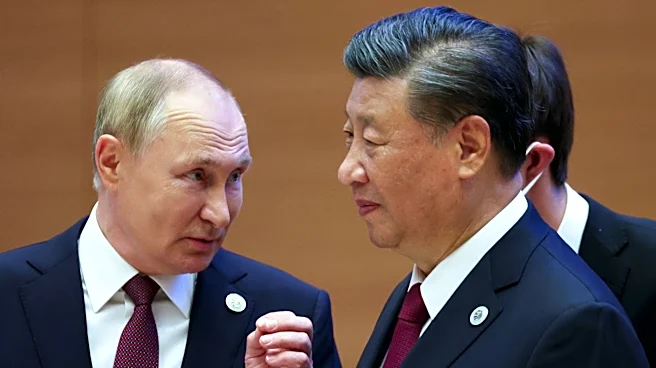
The reintroduction of the CCP Fentanyl Sanctions Act signals a renewed push in Congress to hold China accountable for its role in the fentanyl crisis. The bill's progress will likely involve committee hearings and debates, with potential amendments before a vote. The timing of the bill's reintroduction, ahead of a planned visit by Xi Jinping to Washington, suggests an attempt to influence U.S. priorities and discussions with China. If passed, the bill would empower the U.S. Treasury Department to impose sanctions, potentially leading to financial penalties and restrictions on targeted Chinese entities. This could prompt reactions from China, potentially escalating tensions in U.S.-China relations. The effectiveness of these sanctions would depend on their implementation and China's response, which could range from increased cooperation to retaliatory measures. The U.S. will also continue to explore other avenues, including diplomatic pressure and domestic initiatives, to combat fentanyl overdoses.
Beyond the Headlines
The fentanyl crisis is not just a public health issue but also a complex geopolitical challenge, exposing the intricate connections between global supply chains, international crime, and diplomatic relations. The bill highlights the ethical dilemma of regulating a global pharmaceutical industry where legal and illicit activities can intertwine. The shift from direct fentanyl exports to precursor chemical shipments to Mexico demonstrates the adaptability of illicit networks and the need for comprehensive, evolving enforcement strategies. The debate surrounding this bill also touches upon the broader narrative of U.S.-China relations, where economic competition, national security concerns, and humanitarian crises intersect. The long-term implications could include a re-evaluation of international agreements on chemical controls and a greater emphasis on intelligence sharing and coordinated law enforcement efforts across borders. It also raises questions about the responsibility of nations to regulate industries within their borders that contribute to global crises.