
What's Happening?
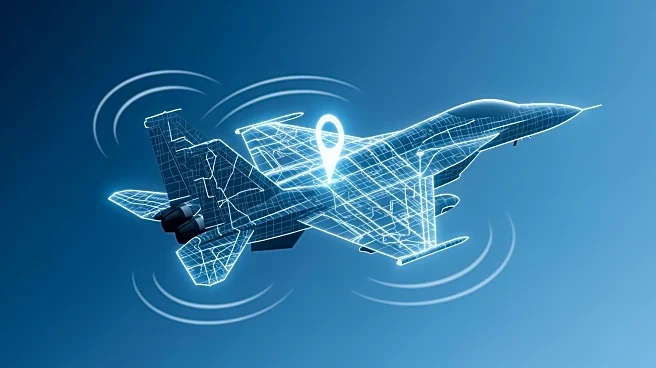
The U.S. Senate has passed a bipartisan bill requiring all military aircraft to use Automatic Dependent Surveillance–Broadcast (ADS-B) technology to broadcast their locations. This legislative move follows
a tragic incident in January where an Army helicopter collided with an airliner over Washington, D.C., resulting in 67 fatalities. The crash highlighted a loophole allowing military aircraft to fly without broadcasting their locations. The bill, supported by Republican Sen. Ted Cruz and Democratic Sen. Maria Cantwell, aims to prevent such tragedies by mandating the use of ADS-B technology, which is already standard for commercial airliners. The Trump administration has expressed support for the bill, and it is expected to be considered by the House soon.
Why It's Important?
The legislation addresses significant safety concerns in U.S. airspace, particularly around high-traffic areas like Washington, D.C. By requiring military aircraft to broadcast their locations, the bill aims to reduce the risk of mid-air collisions, thereby enhancing overall aviation safety. The National Transportation Safety Board (NTSB) has long advocated for such measures, citing numerous near-miss incidents. The bill also mandates a review of airport safety nationwide and encourages better data sharing between the military and the Federal Aviation Administration (FAA). This could lead to improved safety protocols and potentially save lives by preventing future accidents.
What's Next?
The bill now awaits consideration in the House of Representatives. If passed, it will be sent to the President for signing into law. The FAA has already implemented interim measures, such as requiring military helicopters to keep their locator systems on in crowded airspace and adjusting flight operations around airports. These measures will remain in place to ensure continued safety. The final report on the January crash is expected next year, which may provide further insights and recommendations for aviation safety improvements.