



What's Happening?
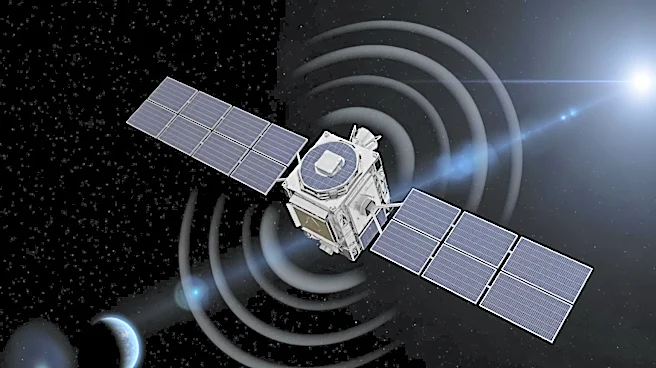
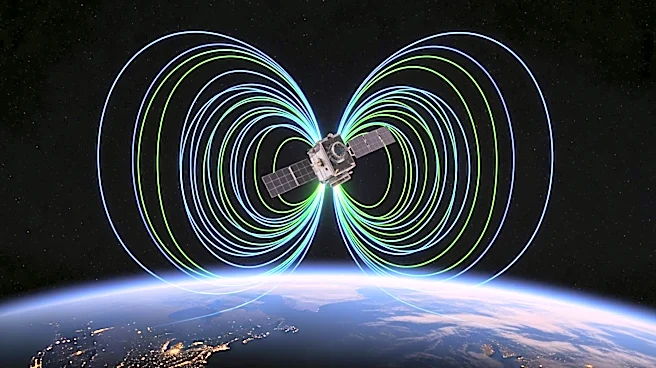
The Solar wind Magnetosphere Ionosphere Link Explorer (SMILE) is a collaborative space mission between the Chinese Academy of Sciences and the European Space Agency. This mission aims to study Earth's magnetic field response to solar storms in real-time,
a phenomenon not yet fully observed. SMILE will be launched into an elliptical orbit, ranging from 5,000 kilometers over the South Pole to 121,000 kilometers above the North Pole, to provide a comprehensive view of how solar wind interacts with Earth's magnetosphere. This interaction can trigger geomagnetic storms, which pose risks to satellites and power grids. The mission, which began its study phase in 2016, was selected from 13 proposals in 2015. However, the launch, initially scheduled for April 9, has been postponed due to a technical issue, with no new date announced yet.
Why It's Important?
The SMILE mission is significant as it aims to fill gaps in understanding the global impact of solar storms on Earth's magnetosphere. Current missions like NASA's MMS and ESA-NASA's SOHO focus on localized events, but SMILE's global perspective could improve predictions of geomagnetic storms. These storms can disrupt satellite navigation and radio communications, and in severe cases, affect power grids, as seen in the 1989 Quebec blackout. By providing better forecasting, SMILE could help mitigate these risks, allowing operators to protect vulnerable systems in advance. This mission represents a major step in international collaboration in space science, potentially leading to advancements in space weather prediction and satellite safety.
What's Next?
The next steps for the SMILE mission involve resolving the technical issues that delayed its launch. Once launched, the mission will begin its observations, providing data that could enhance the understanding of solar-terrestrial interactions. The findings may influence future space weather forecasting models and strategies for protecting infrastructure from geomagnetic storms. Stakeholders, including satellite operators and power grid managers, will likely monitor the mission's progress closely, as its outcomes could inform policy and operational decisions in these sectors.
Beyond the Headlines
Beyond its immediate scientific goals, the SMILE mission highlights the growing trend of international cooperation in space exploration. This partnership between China and Europe could set a precedent for future collaborations, potentially leading to more comprehensive and cost-effective space missions. Additionally, the mission underscores the importance of understanding space weather, not just for technological infrastructure but also for broader societal resilience. As reliance on satellite technology grows, the ability to predict and mitigate space weather impacts becomes increasingly crucial.