






What's Happening?
In 1952, an Air Force SA-16 Albatross plane crashed in Death Valley, California, during a joint operation with the CIA aimed at countering Communist influence during the Cold War. The aircraft, part of the Air Resupply and Communications (ARC) Service,
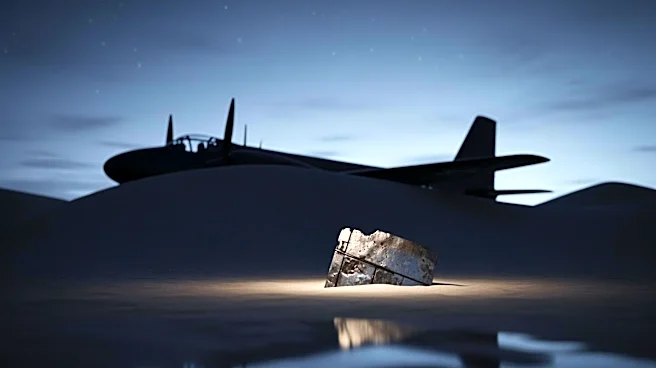
was on a routine flight from Mountain Home Air Force Base in Idaho when it encountered engine failure. The six airmen onboard parachuted to safety, with two sustaining minor injuries. The crash exposed the existence of the ARC Wings, a secretive collaboration between the Air Force and CIA, which involved unconventional warfare support. The wreckage remains in Death Valley, serving as a relic of Cold War history.
Why It's Important?
The crash and subsequent revelation of the ARC Wings highlight the lengths to which the U.S. government went to counter Communist threats during the Cold War. This operation underscores the strategic importance of intelligence and military collaboration in national security efforts. The incident also illustrates the risks and challenges faced by military personnel in covert operations. The continued presence of the wreckage in Death Valley serves as a historical reminder of the era's geopolitical tensions and the clandestine measures employed to address them.
What's Next?
While the ARC Wings were dismantled in the early 1950s, the legacy of such operations continues to influence current military and intelligence strategies. The site of the crash remains a point of interest for historians and visitors, offering insights into Cold War tactics. The story of the crash may prompt further exploration into other undisclosed operations from the era, potentially leading to new historical discoveries and a deeper understanding of Cold War dynamics.
Beyond the Headlines
The crash site in Death Valley, described as 'bizarre in a post-apocalyptic way,' offers a unique cultural and historical perspective. It raises questions about the ethical implications of secret military operations and the transparency of government actions during times of conflict. The preservation of the site as a historical artifact also reflects broader societal interests in uncovering and understanding hidden aspects of national history.