




What's Happening?
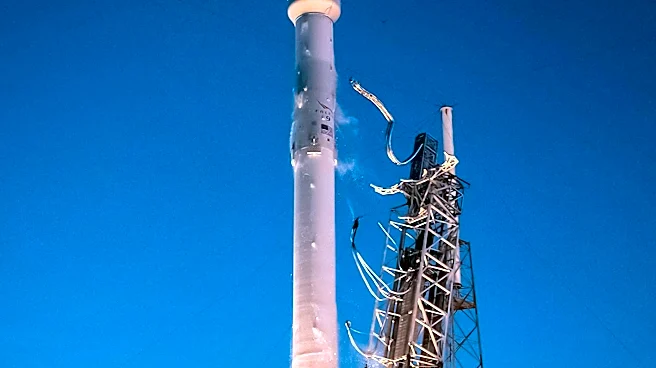
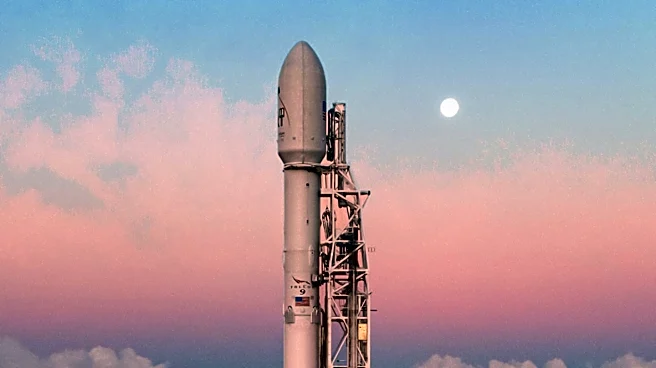
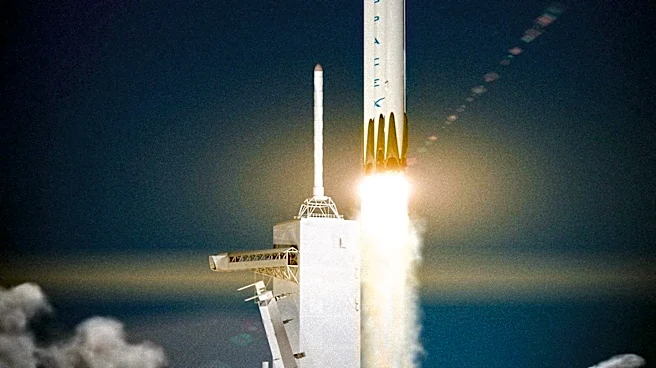
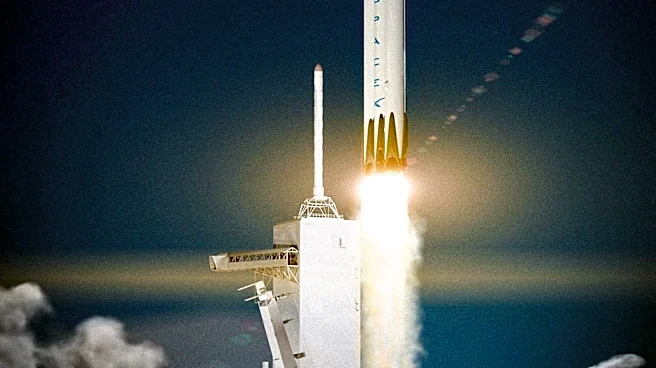
A discarded SpaceX rocket stage is on a collision course with the moon, expected to impact at a speed of 5,400 mph near Einstein Crater. This event, scheduled for next week, will create a new crater and a debris plume observable from Earth. The rocket stage,
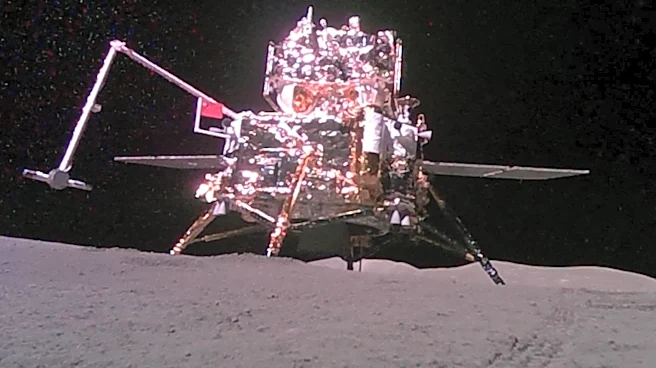
which launched two lunar landers in January 2025, highlights the growing issue of space debris as more private and national entities engage in lunar exploration. The successful landing of Firefly Aerospace's Blue Ghost lander contrasts with the crash of Japan-based ispace's lander. Scientists are keen to study the impact to better understand the risks posed by human-made objects in space.
Why It's Important?
The impending crash underscores the increasing risks associated with space debris as lunar exploration intensifies. With the moon becoming a target for future bases and missions, the need for improved debris monitoring and traffic control is critical. The United States and China are both planning manned lunar missions, and companies like SpaceX and Blue Origin are competing to provide landers for NASA's Artemis program. The incident raises questions about the sustainability of space exploration and the potential hazards for future lunar bases and astronauts.
What's Next?
As the moon becomes a focal point for exploration, scientists and space agencies will likely push for better tracking and management of space debris. The impact will be monitored by lunar orbiters, providing valuable data for future missions. The event may prompt discussions on international regulations and guidelines to mitigate space debris risks, especially as more private companies enter the space race.