





What's Happening?
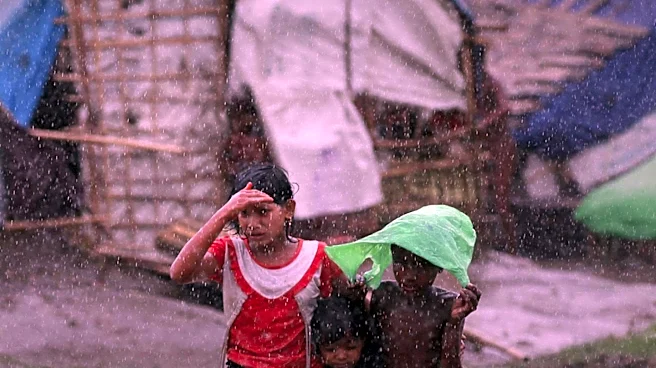
Congolese refugees in the Great Lakes Region are experiencing increasingly dire circumstances due to ongoing conflict in eastern Democratic Republic of Congo (DRC), coupled with tightening border restrictions and severe international funding cuts. Land
border closures between Burundi and Rwanda, in effect from 2015-2023 and again since 2024, have halted repatriation efforts. Burundi's Interior Minister, Léonidas Ndaruzaniye, announced in October that individuals from or transiting through M23-controlled areas would be denied entry. Uganda has also imposed stricter cross-border movement rules due to Ebola concerns, requiring non-essential Congolese travelers to return to the DRC, which contradicts its traditional 'open-door' refugee policy. These measures, alongside a significant reduction in humanitarian aid—UNHCR reported only 20% of the required $35 million for Burundi's 2026 assistance, and the International Rescue Committee noted only 6% of funding secured for Uganda's refugee health response in 2026—are severely impacting the protection and well-being of over 1.25 million Congolese refugees and asylum seekers, 80% of whom are hosted in neighboring countries.
Why It's Important?
The deteriorating situation for Congolese refugees in the Great Lakes Region carries significant humanitarian and geopolitical implications. The tightening of border policies by host nations like Burundi and Uganda, driven by security concerns and public health crises, undermines international refugee protection principles and exacerbates the vulnerability of displaced populations. The drastic cuts in international funding for humanitarian aid mean that essential services, including health and basic sustenance, are being severely curtailed for over a million refugees. This not only creates a humanitarian crisis but also risks destabilizing the region further. Armed groups, including M23, FDLR, and Burundian rebels, exploit the unresolved refugee situation to justify their actions and recruit members from refugee populations, leading to heightened fears of armed infiltration in host countries and complicating political solutions. The forced returns and restricted movements also raise concerns about human rights violations and the potential for increased conflict as refugees are caught between war and closing doors.
What's Next?
The immediate future for Congolese refugees in the Great Lakes Region appears challenging, with continued pressure on host countries and a critical need for sustained international support. Peace efforts will need to expand beyond repatriation to ensure respect for refugees' rights and protection, requiring diplomatic engagement and independent monitoring of displacement and return conditions. Integrated regional solutions are essential to address the complex situations of Congolese, Burundian, and Rwandan refugees, involving refugees themselves in the development of these processes. Donors and host states must prioritize maintaining protection, including consistent funding, to ensure that any returns are voluntary and not driven by desperation. Without these interventions, the humanitarian crisis is likely to deepen, potentially leading to further regional instability and increased recruitment by armed groups, perpetuating a cycle of conflict and displacement.
Beyond the Headlines
The crisis in the Great Lakes Region highlights a broader global challenge where humanitarian principles clash with national security concerns and resource limitations. The recruitment of refugees by armed groups, as reported by the UN Group of Experts, underscores the complex interplay between displacement, conflict, and regional security. This situation raises ethical questions about the responsibility of host nations and the international community to protect vulnerable populations, especially when such protection is perceived to conflict with national interests. The long-term implications include the potential for protracted instability, the erosion of international refugee law, and the creation of a generation of displaced individuals with limited access to education, healthcare, and economic opportunities. The crisis also exposes the fragility of 'open-door' policies in the face of overwhelming humanitarian needs and the critical importance of sustained, predictable international funding to prevent humanitarian catastrophes and foster regional stability.