


What's Happening?
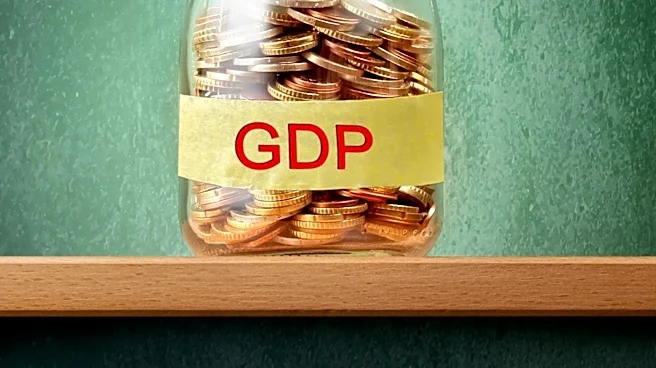
During an appearance on 'CUOMO,' Bill O'Reilly asserted that new data indicates an increase in wealth and a decrease in poverty across the U.S. This claim was made in the context of Republicans attempting to convince voters to maintain their control of Congress.
However, host Chris Cuomo countered O'Reilly's perspective, stating that many Americans do not perceive the economic situation as positively as the data might suggest. Cuomo highlighted a 'two-tier system' in America, where a substantial minority does not succeed despite the rewards of capitalism for hard work. He emphasized that while there is more money in the country than ever, its distribution is heavily skewed towards the top.
Why It's Important?
This debate between Bill O'Reilly and Chris Cuomo underscores a significant national discussion regarding economic inequality and its perception among the American populace. O'Reilly's argument, aligning with a Republican narrative, suggests that overall economic indicators are positive, which could be used to bolster their political standing. Conversely, Cuomo's point about wealth distribution reflects a common concern among many Americans who feel left behind despite national economic growth. This divergence in viewpoints is crucial for understanding the political landscape, as economic sentiment often plays a pivotal role in election outcomes. The discussion highlights the challenge for political parties to connect macroeconomic data with the lived experiences of everyday citizens, particularly concerning issues like household finances and the cost of living.
What's Next?
The ongoing debate about U.S. economic wealth and its distribution is likely to remain a central theme in political discourse, especially as the 2026 midterms approach. Political figures and commentators will continue to present differing interpretations of economic data, attempting to sway public opinion. The focus will remain on how economic policies impact various segments of the population, with particular attention to issues such as inflation, wages, and the affordability of essential goods and services. The ability of political parties to effectively address or frame these economic concerns will be critical in shaping voter sentiment and influencing the outcomes of future elections, as the perception of economic well-being often dictates political support.
Beyond the Headlines
The discussion between O'Reilly and Cuomo delves into the deeper societal implications of economic disparities. It touches upon the American Dream and whether it remains accessible to all, or if a growing wealth gap is creating a permanent underclass. The 'two-tier system' mentioned by O'Reilly, and Cuomo's emphasis on top-heavy wealth distribution, point to fundamental questions about fairness, opportunity, and social mobility in the U.S. This debate is not merely about statistics but about the social contract and the role of government in ensuring a more equitable society. It also highlights the challenge of communicating complex economic realities to a diverse public, where personal financial experiences often outweigh abstract economic indicators.