





What's Happening?
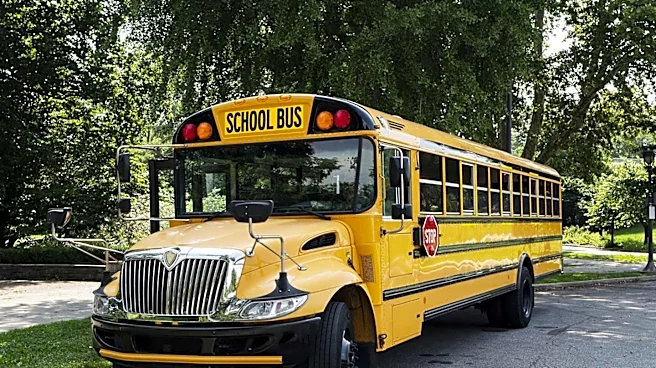
Republican lawmakers in Pennsylvania are proposing legislation to counteract a state Supreme Court ruling that permits school districts to replace traditional bus services for charter school students with public transit passes. The ruling, issued in January,
clarified that school districts are not required to provide identical transportation methods for charter and public school students, as long as alternative free transportation is offered. This decision followed a lawsuit against Wilkinsburg School District for switching charter students to bus passes. The proposed bills, championed by State Sen. Dawn Keefer (R., York) and others, aim to mandate that charter students, particularly those in kindergarten through eighth grade, receive transportation 'under the same terms and conditions, including mode of transportation' as traditional students. Currently, neither the Senate nor House versions of these bills have advanced out of committee. The issue has sparked concern among parents and charter school advocates, who argue about the safety and practicality of young children using public transit, especially in areas with limited infrastructure.
Why It's Important?
This legislative push highlights a significant ongoing debate in Pennsylvania regarding the funding and equitable provision of educational services, particularly for charter schools. The state Supreme Court's ruling, while offering clarity on existing law, has intensified the conflict between traditional public school districts, which face rising transportation costs and bus driver shortages, and charter schools, which advocate for comparable services for their students. If the proposed legislation passes, it would mandate increased financial and logistical burdens on school districts, potentially impacting their budgets and operational capacities. Conversely, if the ruling stands, charter school students in some areas may continue to rely on public transit, raising concerns about student safety, commute times, and potential inequities compared to their public school counterparts. This situation also underscores the broader tension in the state Capitol over alternatives to traditional public schools and how state resources are allocated.
What's Next?
The proposed bills to override the Supreme Court ruling are currently stalled in committee, indicating a challenging path forward. Charter school advocates are exploring legal options if legislative efforts fail, potentially leading to new lawsuits challenging the constitutionality of the current transportation arrangements. School districts like Woodland Hills and Whitehall-Coplay, which have already begun issuing public transit passes, will likely continue this practice unless new legislation is enacted or further court decisions are made. State House Education Committee Chair Pete Schweyer (D., Lehigh) has criticized Republicans for not addressing broader issues in school transportation funding and outdated state laws, suggesting that a more comprehensive legislative approach to transportation reform might be necessary. The debate is expected to continue in the state Capitol, with potential for further legislative action or legal challenges as stakeholders seek to resolve the transportation issue for charter school students.
Beyond the Headlines
The controversy over charter school transportation in Pennsylvania delves into deeper issues of educational equity, parental choice, and the financial sustainability of public education systems. The argument that young children should not be placed on public buses alone, as voiced by State Sen. Dawn Keefer, highlights a fundamental concern about child safety and welfare that transcends the legal interpretation of 'same conditions.' This situation also exposes the systemic challenges in Pennsylvania's school transportation funding, with outdated regulations hindering efficiency and increasing costs. The differing views on whether public transit is a 'safe, accessible, reliable' method for all students, particularly in rural and suburban areas, underscore a disparity in infrastructure and resources. Ultimately, this debate reflects a broader societal discussion about how to balance the needs of diverse educational models with the practical and financial realities of public services, and how to ensure all students have equitable access to education regardless of their chosen school type.