



What's Happening?
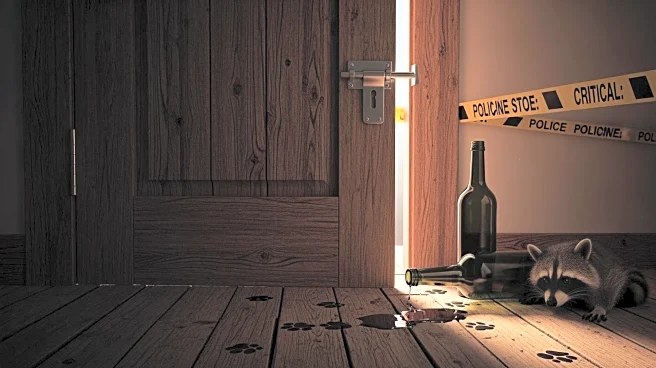
A raccoon in Ashland, Virginia, has gained notoriety after repeatedly breaking into a state-run liquor store and other businesses in the same shopping center. The animal, dubbed Hanover County's 'trashed panda,' was found passed out in the liquor store bathroom
after a spree that involved destroying 14 bottles of various alcoholic beverages. This incident, which occurred on November 29, has brought the raccoon international attention and turned it into a local mascot. The raccoon has previously been spotted in a martial arts studio and a Department of Motor Vehicles office within the same complex. Despite its antics, the raccoon has not been relocated, as doing so could be fatal for the animal. Instead, it was released back into the wild a mile from the store.
Why It's Important?
The raccoon's escapades have not only captured public interest but have also led to significant fundraising efforts for the Hanover County Animal Protection and Shelter. Merchandise featuring the raccoon's image has raised over $200,000, marking the largest influx of donations the department has seen in two decades. This funding is crucial as it will help the department address the growing needs of the county's animal welfare services, including potential improvements to facilities and increased veterinary services. The incident highlights the unexpected ways in which public interest can be leveraged to support community services.
What's Next?
The Hanover County Animal Protection department is considering how to best utilize the funds raised from the raccoon's newfound fame. Potential projects include enhancing the water pressure system, expanding veterinary services, and renovating the animal washroom. Meanwhile, local businesses and organizations are capitalizing on the raccoon's popularity by hosting themed events and campaigns. The raccoon's future antics remain uncertain, but its story continues to engage the community and raise awareness about wildlife interactions.
Beyond the Headlines
The raccoon's story underscores the broader issue of wildlife management in urban areas. It raises questions about how communities can coexist with wildlife and the responsibilities of local authorities in managing such interactions. The incident also serves as a reminder of the potential risks associated with human-wildlife encounters, particularly concerning health and safety. The raccoon's ability to repeatedly access the shopping center suggests a need for improved security measures to prevent similar incidents in the future.