



What's Happening?
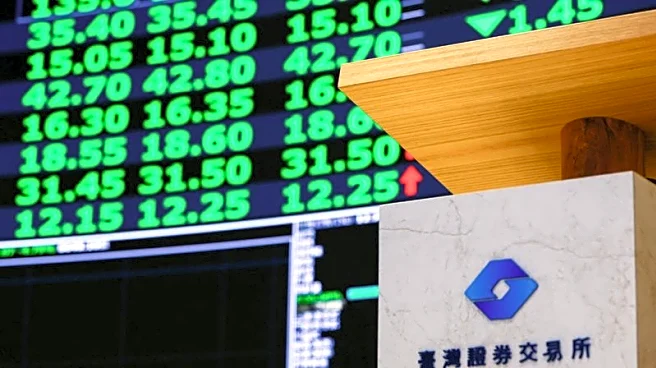
Asian stock markets experienced a significant rebound following a sharp decline, as global investors speculated that the ongoing conflict with Iran might not be prolonged. This recovery was influenced by a decrease in oil prices, which had previously
surged to nearly $120 per barrel before settling back to around $90. President Trump commented on the situation, suggesting that the conflict was nearing completion and hinted at potential intensified actions against Iran if it attempted to disrupt global oil supplies. The Nikkei 225 in Tokyo rose by 2.9% after revised economic data showed Japan's economy grew faster than initially estimated. Other Asian markets, including Australia's S&P/ASX 200 and South Korea's Kospi, also saw gains.
Why It's Important?
The fluctuation in oil prices and the associated market volatility highlight the global economic sensitivity to geopolitical tensions, particularly in the Middle East. The Strait of Hormuz, a critical chokepoint for global oil shipments, remains a focal point of concern. Prolonged disruptions could lead to sustained high oil prices, exacerbating inflationary pressures and potentially leading to stagflation, where economic growth stagnates while inflation remains high. This scenario poses risks to both consumer budgets and corporate expenses, potentially impacting economic stability worldwide.
What's Next?
Investors and policymakers will closely monitor developments in the Iran conflict and its impact on oil prices. Any prolonged closure of the Strait of Hormuz could lead to further economic disruptions. Additionally, President Trump's comments about potentially taking control of the strait indicate possible escalations in U.S. military involvement, which could further influence market dynamics. The situation remains fluid, with potential implications for global energy markets and economic policies.