








What's Happening?
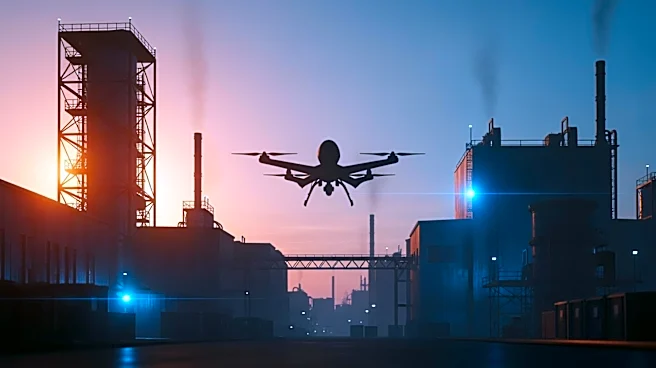
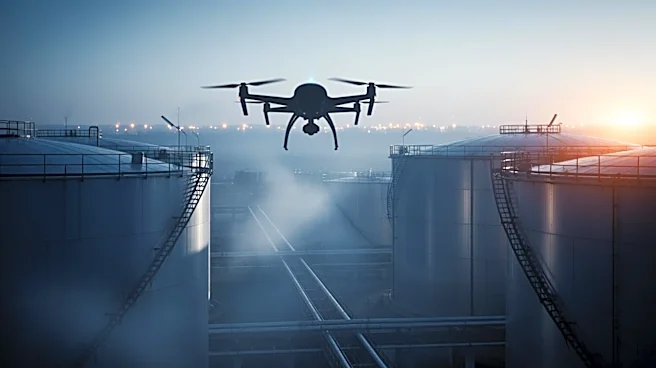
Drones operated by the Special Operations Center 'A' of the Security Service of Ukraine (SSU) have struck the Samara line-production dispatch station in Prosvet, Samara region, Russia. This facility is crucial for blending high- and low-sulfur crude oil
to produce the Urals export grade, a key component of Russia's oil transportation infrastructure. The attack resulted in a massive fire and damage to five oil tanks, each with a capacity of 20,000 cubic meters. The strike is part of a broader Ukrainian strategy to disrupt Russian logistics and reduce revenue from oil sales, which could otherwise fund the war against Ukraine.
Why It's Important?
The attack on the Samara oil terminal is significant as it directly impacts Russia's ability to export oil, a major source of revenue. By targeting such infrastructure, Ukraine aims to weaken Russia's economic capacity to sustain its military operations. The disruption in oil logistics and potential supply chain issues could lead to increased storage costs and contractual challenges for Russia. This move underscores the strategic use of drones in modern warfare, highlighting their role in not only direct combat but also in economic warfare by targeting critical infrastructure.
What's Next?
The continued use of drones by Ukraine to target Russian infrastructure suggests a sustained strategy to undermine Russia's economic and military capabilities. This could lead to further retaliatory measures by Russia, potentially escalating the conflict. Additionally, the international community may respond with increased diplomatic efforts to address the ongoing tensions. The effectiveness of these drone strikes could also influence other nations to adopt similar tactics in conflicts, potentially changing the landscape of modern warfare.
Beyond the Headlines
The use of drones in this context raises ethical and legal questions about the targeting of civilian infrastructure in warfare. While the primary aim is to disrupt military funding, the collateral damage and potential environmental impact of such strikes cannot be overlooked. This development also highlights the growing importance of technological advancements in military strategy, as nations increasingly rely on unmanned systems for both offensive and defensive operations.