






What's Happening?
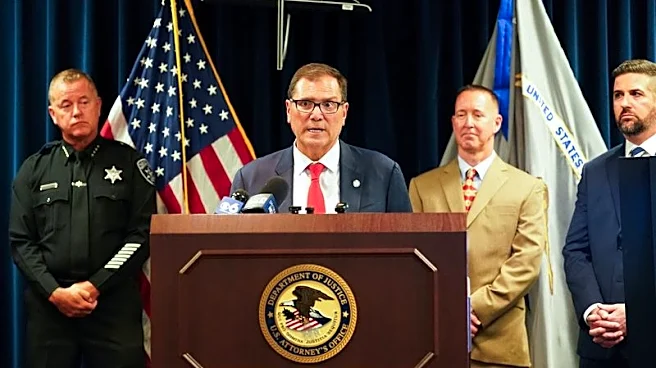
The Federal Bureau of Investigation (FBI) has announced it thwarted a planned attack on the New York State Capitol, leading to the arrest of 35-year-old Jessica Bowie. Bowie has been charged with providing material support to a foreign terrorist organization,
specifically ISIL (ISIS), which the U.S. designated as such in 2004. According to the Department of Justice, Bowie allegedly obtained an explosive and planned to destroy parts of the state capitol and kill lawmakers before fleeing to Syria. The case relies heavily on confidential informants, with an FBI special agent outlining in a 21-page complaint that Bowie, an Albany resident, frequently used social media to express support for terrorism. She allegedly communicated with an FBI informant through encrypted apps, expressing her desire to make a bomb and identifying the state capitol as her target. Informants reportedly provided her with funds to purchase bomb-making materials and later sold her a firearm and ammunition, instructing her on their use. Bowie was arrested on Wednesday after allegedly conducting reconnaissance at the capitol.
Why It's Important?
This incident highlights the ongoing threat of domestic terrorism and the challenges law enforcement faces in identifying and neutralizing such plots. The reliance on confidential informants in this case, as in many others, underscores a controversial but often utilized tactic by U.S. authorities in counter-terrorism efforts. While effective in preventing attacks, these methods have drawn criticism from rights groups who argue that 'sting' operations can sometimes involve undercover agents convincing vulnerable individuals to plot attacks, raising questions about entrapment. The case also brings to the forefront the role of social media in radicalization and the dissemination of extremist ideologies, as Bowie allegedly used multiple accounts to relay support for terrorism. The alleged target, a state capitol building, signifies a direct threat to democratic institutions and elected officials, potentially impacting public safety and the sense of security within government spaces.
What's Next?
Jessica Bowie faces charges of providing material support to a foreign terrorist organization, which carries a potential sentence of up to 20 years in prison. Her legal proceedings will likely involve scrutiny of the evidence gathered through confidential informants and the methods used by the FBI. Defense attorneys may challenge the government's tactics, potentially drawing parallels to past controversial cases like the 'Newburgh Four,' where a judge later ruled that the 'real lead conspirator' was the United States. The outcome of this case could influence future counter-terrorism strategies and the legal precedents surrounding the use of informants in preventing domestic attacks. Law enforcement agencies may also review their protocols for monitoring online extremist activities and engaging with individuals who express violent intentions on social media platforms.
Beyond the Headlines
The alleged plot against the New York State Capitol, if successful, could have had significant implications beyond the immediate physical damage and loss of life. Such an attack could erode public trust in government security, lead to increased security measures at state capitols nationwide, and potentially fuel further political polarization. The use of confidential informants, while a critical tool, also raises ethical questions about the line between preventing crime and potentially instigating it. The 'Newburgh Four' case serves as a stark reminder of the complexities and potential pitfalls of these operations, where the role of the informant can become a central point of contention. This incident also underscores the persistent challenge of combating homegrown extremism, which often operates through online channels, making detection and intervention a continuous and evolving task for national security agencies.