



What's Happening?
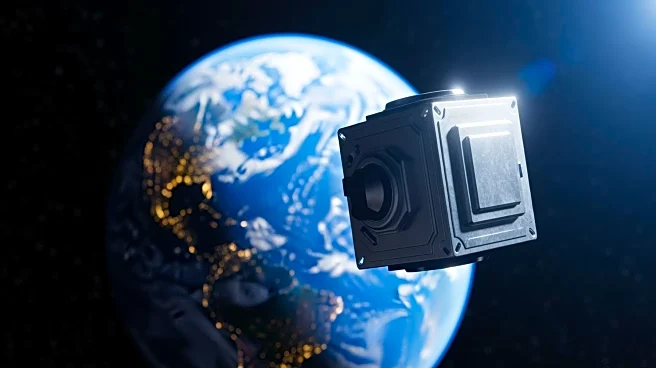
NASA has successfully deployed a set of CubeSats from the Kibo laboratory module into Earth's orbit. These CubeSats, designed by students from Mexico, Italy, Thailand, Malaysia, and Japan, are part of a series of Earth observation and technology demonstration
missions. CubeSats are nanosatellites that weigh between 1 to 10 kilograms and have become a popular platform for scientific investigations and technology demonstrations due to their cost-effectiveness and standardized form factor. The deployment marks a significant collaboration between government, industry, and academia, showcasing the growing capabilities and applications of CubeSats in space exploration.
Why It's Important?
The deployment of CubeSats represents a significant advancement in space technology, providing a cost-effective means for conducting scientific research and testing new technologies. This initiative not only enhances international collaboration in space exploration but also offers educational opportunities for students worldwide. By involving students in the design and deployment of these satellites, NASA is fostering a new generation of scientists and engineers, which is crucial for the future of space exploration and technology development. The success of these missions could lead to more frequent and diverse applications of CubeSats, potentially revolutionizing how space missions are conducted.