




What's Happening?
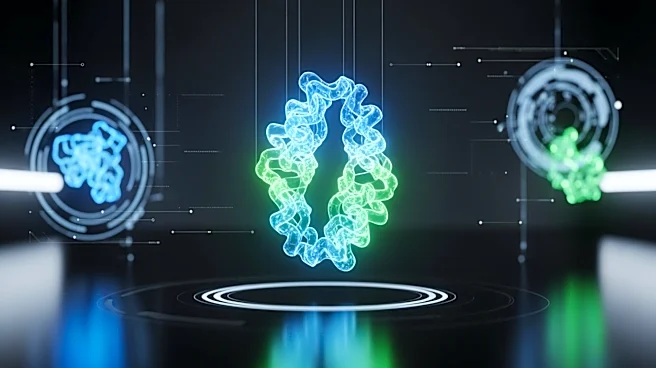
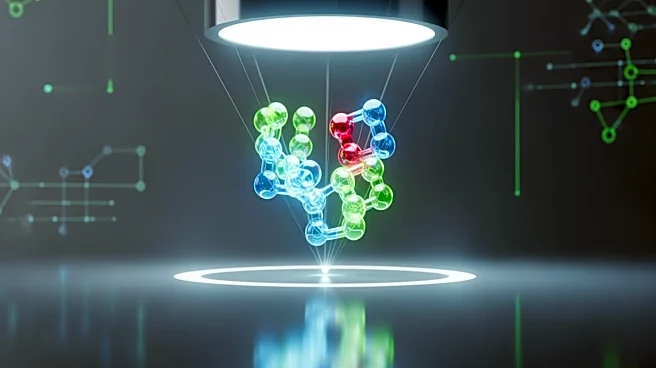
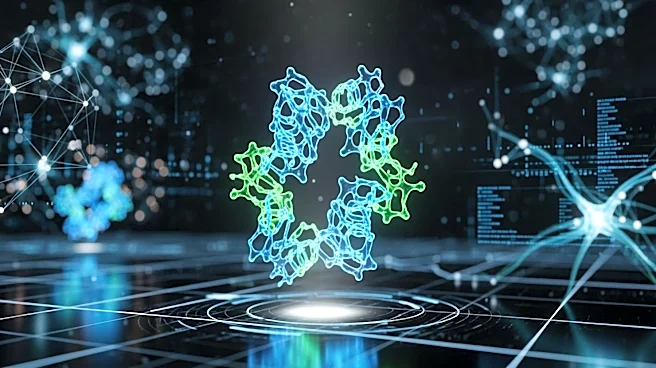
A research team from the Korea Advanced Institute of Science and Technology (KAIST) has developed a method using deep learning to design proteins that can selectively recognize small molecules, such as the stress hormone cortisol. This approach involves
creating a universal protein backbone, the NTF2-like fold, which can be customized to bind specific molecules. The study, published in Nature Communications, demonstrates the potential for these AI-designed proteins to be used in biosensors, addressing challenges in small molecule recognition. The research marks a shift from modifying natural proteins to designing new proteins with desired functions, expanding the possibilities for applications in disease diagnosis and environmental monitoring.
Why It's Important?
This breakthrough in protein design could significantly impact the fields of life science and synthetic biology by providing a scalable and customizable approach to creating molecular sensors. The ability to design proteins that can detect specific compounds with high affinity and specificity opens new avenues for developing diagnostic tools and environmental sensors. This method overcomes limitations of traditional protein engineering, which relied on natural proteins, by offering a more versatile and efficient way to create functional biosensors. The research could lead to advancements in healthcare, drug development, and environmental science, providing new tools for monitoring and responding to biological and chemical changes.
What's Next?
The KAIST team plans to further refine their protein design method and explore its applications in various fields. The development of biosensors based on these AI-designed proteins could lead to new diagnostic devices and environmental monitoring systems. As the technology advances, it may also facilitate the creation of engineered cells that can respond to specific chemical signals, enhancing capabilities in synthetic biology. The research sets the stage for future studies aimed at improving the specificity and functionality of these designed proteins, potentially leading to widespread adoption in scientific and industrial applications.