








What's Happening?
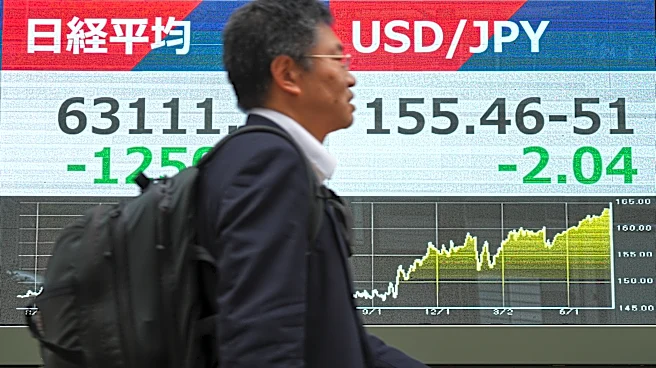
The Japanese yen has risen for a third consecutive session, driven by speculation of further intervention by Japan and the United States to support the currency. Last week, both countries conducted a coordinated yen-buying intervention, which has led
to increased vigilance among traders. The yen's appreciation comes amid a backdrop of falling oil prices, following President Trump's decision to refrain from escalating tensions with Iran. Rising energy prices are expected to impact the euro zone and Japan more heavily than the United States, which is relatively insulated from oil shocks.
Why It's Important?
The yen's recent strength highlights the ongoing challenges faced by Japan in managing its currency amid global economic pressures. The intervention by Japan and the US underscores the importance of maintaining currency stability, particularly for economies heavily reliant on energy imports. For traders and investors, the yen's movements offer insights into broader market dynamics, including the impact of geopolitical tensions and energy prices on currency valuations. The situation also reflects the delicate balance central banks must maintain in their monetary policy decisions to support economic growth while managing inflationary pressures.
What's Next?
Market participants will closely monitor any further interventions by Japan and the US, as well as potential policy shifts by the Bank of Japan. The yen's trajectory will likely be influenced by global economic developments, including energy price fluctuations and geopolitical events. Traders may adjust their positions based on perceived risks and opportunities, while policymakers will need to consider the long-term implications of currency interventions on economic stability. The situation may also prompt discussions on the effectiveness of coordinated interventions in achieving desired currency outcomes.