



What's Happening?
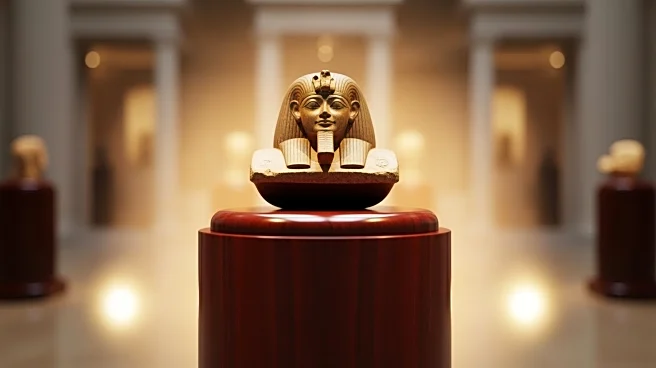
A 3,500-year-old stone head, believed to have been stolen from Luxor, Egypt, during the Arab Spring in the early 2010s, has been returned to Egypt. The Dutch Government Information and Heritage Inspectorate announced the return in a statement. The artifact,
depicting a high-ranking official from the reign of Pharaoh Thutmose III, was identified at the TEFAF Maastricht art fair in the Netherlands in 2022. Concerns about the artifact's provenance led Sycomore Ancient Art, the dealer, to consult with experts from the British Museum and contact the Dutch National Police. An investigation confirmed the artifact's authenticity and its illegal removal from Egypt. The return was facilitated under the 1970 UNESCO Convention, which mandates the prevention of unlawful export and the return of cultural objects to their country of origin. The formal handover took place at the Egyptian embassy in The Hague.
Why It's Important?
The return of the artifact underscores the ongoing challenges of cultural heritage protection and the illicit trade in antiquities. The artifact's recovery highlights the effectiveness of international cooperation and legal frameworks like the 1970 UNESCO Convention in addressing cultural property theft. This event is significant for Egypt, as it strengthens efforts to reclaim cultural heritage items lost during periods of political instability, such as the Arab Spring. For the Netherlands, it demonstrates a commitment to ethical practices in the art market and the importance of due diligence in art transactions. The case also serves as a reminder to art dealers and collectors about the importance of verifying the provenance of artifacts to prevent the circulation of stolen cultural property.
What's Next?
The successful return of the artifact may encourage other countries to pursue similar cases of cultural property restitution. It could lead to increased scrutiny of artifacts in international art markets, prompting more rigorous provenance checks. Egypt may continue to seek the return of other artifacts taken during the Arab Spring and other periods of unrest. The case could also inspire further collaboration between countries and international organizations to strengthen the protection of cultural heritage. Additionally, it may prompt discussions on enhancing the effectiveness of existing international conventions and agreements related to cultural property.