
What's Happening?
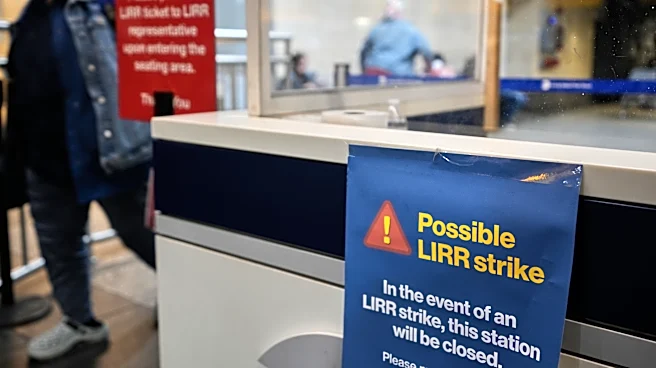
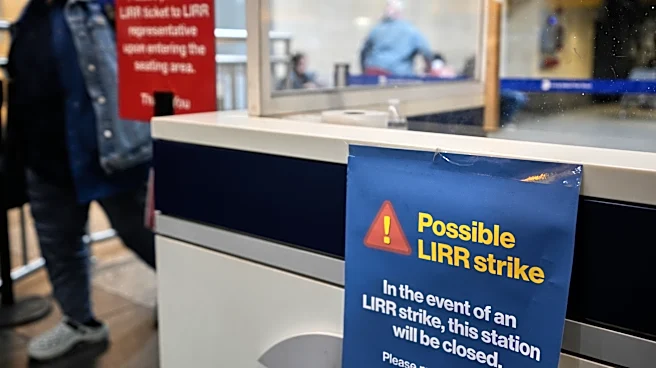
The Long Island Rail Road (LIRR) has ceased operations due to a strike by unionized workers, affecting the largest commuter rail system in North America. The strike involves five unions representing about
half of the LIRR's workforce, who walked off the job after contract negotiations with the Metropolitan Transportation Authority (MTA) failed. The unions are demanding higher wages and are opposed to increased health care premiums for new hires. The strike has disrupted the daily commute for approximately 250,000 people, forcing them to seek alternative transportation options.
Why It's Important?
The strike has significant implications for the New York metropolitan area, affecting both commuters and the local economy. The LIRR is a crucial component of the region's transportation infrastructure, and its shutdown has led to increased traffic congestion and longer travel times. The economic impact is estimated to be substantial, with potential losses for local businesses and tourism. The strike also underscores ongoing labor disputes within the MTA, which could influence future negotiations and labor relations across the region. The outcome of these negotiations could set a precedent for other unionized workers within the MTA and beyond.
What's Next?
Negotiations between the MTA and the unions are expected to continue, although no new talks have been scheduled. The MTA has expressed a willingness to negotiate, but the unions have indicated that they are prepared for a prolonged strike if necessary. The situation remains fluid, with potential developments depending on the progress of negotiations. Commuters and businesses are advised to prepare for continued disruptions, and the MTA is encouraging remote work where possible. The strike's resolution will likely depend on both parties' ability to compromise on key issues such as wage increases and health care contributions.