






What's Happening?
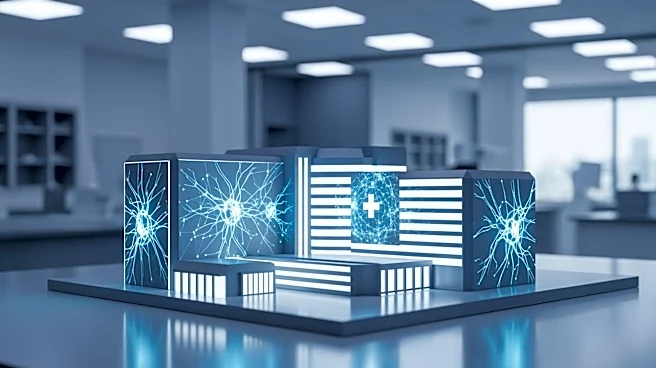
Michael and Susan Dell have announced a $750 million donation to the University of Texas at Austin to establish an 'AI-native' medical center. This significant contribution aims to enhance patient care through the integration of artificial intelligence
and expand healthcare options in Austin, Texas. The UT Dell Medical Center, expected to open in 2030, will be part of a new 300-acre advanced research campus. This donation marks the Dells as the first donors to contribute over $1 billion to the University of Texas, building on their long-standing support for education and healthcare. The center will collaborate with the University of Texas MD Anderson Cancer Center to provide specialized care for complex conditions. The initiative is designed to integrate AI from the ground up, making the hospital an 'intelligent member of the care team' to improve patient-doctor interactions and healthcare outcomes.
Why It's Important?
The donation by Michael and Susan Dell is one of the largest in higher education philanthropy, highlighting the growing role of private funding in public institutions amid declining public support. The establishment of an AI-native medical center represents a significant advancement in healthcare, potentially transforming how medical services are delivered by making them more predictive and seamless. This initiative could set a precedent for future healthcare facilities, emphasizing the integration of technology to enhance patient care. The Dells' contribution also underscores the importance of philanthropy in driving innovation and supporting educational institutions, which could inspire further donations and investments in similar projects.
What's Next?
The University of Texas plans to break ground on the new medical center this fall, with an anticipated opening in 2030. The project is part of a broader 10-year campaign to raise $10 billion for the university. The integration of AI into the medical center will involve collaboration with top specialists and the use of advanced computing resources. As the project progresses, it is expected to attract further investments and partnerships, potentially influencing the development of similar AI-integrated healthcare facilities across the country. The initiative may also lead to advancements in medical research and education, positioning the University of Texas as a leader in innovative healthcare solutions.
Beyond the Headlines
The Dells' donation reflects a strategic shift towards impactful philanthropy, focusing on projects with significant potential to drive change. The AI-native medical center represents a rare opportunity to design a healthcare system around cutting-edge technology from the outset, rather than retrofitting existing infrastructure. This approach could lead to more equitable and efficient healthcare delivery, addressing systemic issues in the current healthcare system. The project also highlights the ethical considerations of integrating AI in healthcare, emphasizing the need for responsible implementation that aligns with human values and ethics.