







What's Happening?
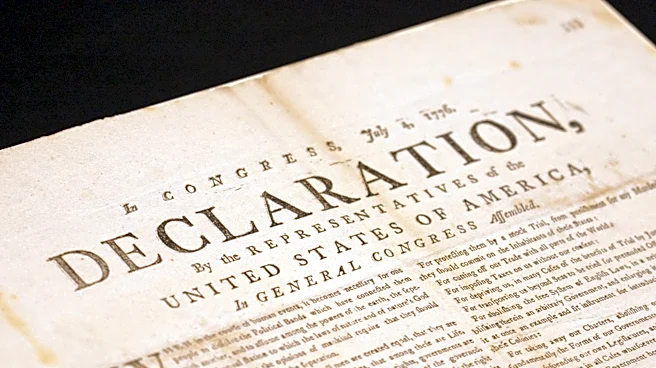
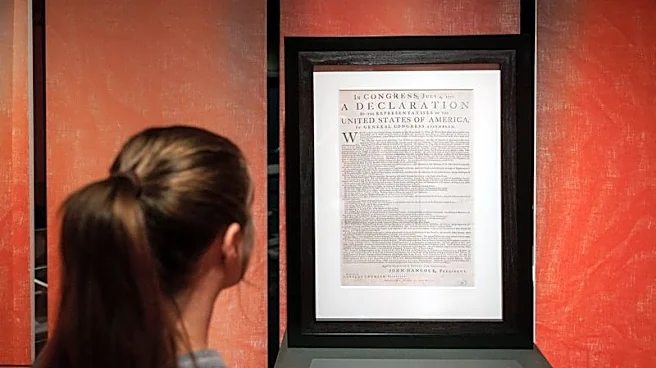
A rare early copy of the Declaration of Independence has been discovered by the UK National Archives in the papers of a captured American privateer ship, the Dalton. The document, identified by volunteer Michael Scurr, is one of only 11 known copies of the Exeter
printing, produced shortly after the original was signed in July 1776. This particular copy was found attached to a report on the Dalton's capture by the Royal Navy on Christmas Eve 1776. The Dalton, a privateer vessel, was operating under the orders of the Continental Congress, with its orders signed by John Hancock. The discovery highlights the role of privateers in the American Revolution and provides a tangible link to the era's historical events.
Why It's Important?
The discovery of this rare document underscores the historical significance of privateers in the American Revolution, who played a crucial role in disrupting British trade and naval operations. The document not only serves as a testament to the spread of revolutionary ideals but also highlights the harsh conditions faced by American sailors captured by the British. This find enriches the understanding of the American Revolution by providing a direct link to the past, offering historians and the public a tangible connection to the era. It also emphasizes the ongoing potential for new historical discoveries, even 250 years after the events took place.
What's Next?
The unveiling of this document ahead of the 250th anniversary of American independence may prompt further research into the role of privateers and the dissemination of revolutionary ideas. Historians and institutions may seek to explore other archives for similar documents, potentially uncovering more about the American Revolution's maritime history. The document's discovery could also inspire educational initiatives and exhibitions, enhancing public engagement with this pivotal period in history.
Beyond the Headlines
This discovery highlights the broader narrative of the American Revolution, emphasizing the ideological motivations behind the conflict. The presence of the Declaration on a privateer ship suggests its use as a motivational tool, reinforcing the idea that the fight was for a greater cause beyond individual grievances. This aspect of the discovery may lead to a deeper exploration of how revolutionary ideals were communicated and sustained among those fighting at sea, offering insights into the cultural and psychological dimensions of the war.