



What's Happening?
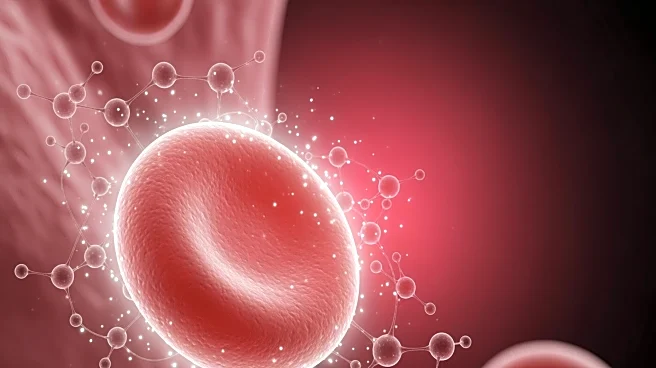
Recent research has uncovered a new form of regulated cell death in mature erythrocytes, termed 'spectosis', which is driven by the complement membrane attack complex and involves the NLRP3/ASC/caspase-8 complex. This discovery emphasizes the critical
role of caspase-8 in determining the type of cell death in erythrocytes, which can be either non-lytic (eryptosis) or lytic (erythronecroptosis). Spectosis is characterized by the release of heme, a pro-inflammatory molecule, suggesting its potential impact on immune responses. The study highlights the complexity of erythrocyte cell death and its implications for immunogenicity, as caspase-8 appears to be a key decision-maker in these processes.
Why It's Important?
Understanding the mechanisms of erythrocyte cell death is crucial for comprehending how these processes influence immune responses. The discovery of spectosis and the role of caspase-8 could have significant implications for diseases where erythrocyte death is a factor, such as malaria or sickle cell anemia. By elucidating these pathways, researchers can better understand how to modulate immune responses, potentially leading to new therapeutic strategies. This research also contributes to the broader understanding of cell death mechanisms, which are vital in various medical and biological contexts.