



What's Happening?
Blue Water has successfully completed over 1000 hours of ocean-based testing for its proprietary propulsion system designed for autonomous surface vessels. This achievement surpasses the U.S. Navy's original requirement of 720 hours of land-based testing.
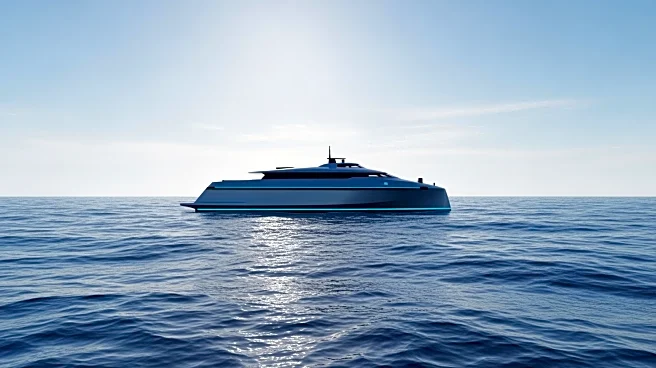
The testing included enhancements such as fuel polishing, electric power generation, and a comprehensive sensor suite. Conducted on a 165-ton, 100-foot-long vessel in New Bedford, MA, the tests are part of the Navy's Modular Attack Surface Craft (MASC) program. The program aims to expand the Navy's fleet of uncrewed ships capable of executing transoceanic missions, requiring robust engine and propulsion systems for extended unmanned operations.
Why It's Important?
This milestone is significant as it demonstrates the viability of autonomous vessels for long-term, unmanned operations at sea, a critical component of the Navy's future fleet strategy. The successful testing under real-world maritime conditions, including exposure to harsh environments and varied load profiles, validates the system's reliability and resilience. This advancement could lead to increased operational efficiency and reduced human risk in naval missions. The development of such technology is crucial for maintaining strategic maritime dominance and could influence future naval procurement and operational strategies.
What's Next?
Blue Water plans to continue testing and refining its systems to further extend the capabilities of autonomous operations at sea. The ongoing development will likely focus on enhancing system durability and performance under even more challenging conditions. As the Navy continues to invest in autonomous technology, further milestones and potential integration into active service could follow. Stakeholders, including defense contractors and technology developers, will be closely monitoring these advancements for potential collaboration and innovation opportunities.