









What's Happening?
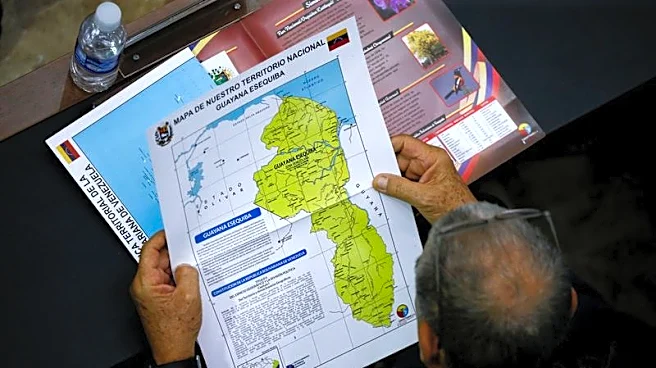
Venezuela has presented its case to the International Court of Justice (ICJ), arguing that the mineral-rich Essequibo region of Guyana was 'fraudulently' taken during the colonial era. The dispute dates back to an 1899 arbitration decision that favored
Guyana, which Venezuela claims was manipulated by American and European arbitrators. Venezuela insists that a 1966 agreement, rather than the ICJ, should determine the rightful ownership of the territory. The hearings, which involve both Venezuela and Guyana, are set to continue for a week. Venezuela's representative, Samuel Reinaldo Moncada Acosta, argued that the 1966 Geneva Agreement nullified the earlier arbitration and should guide the resolution of the dispute. Guyana, on the other hand, maintains that the ICJ has jurisdiction and that the dispute has hindered its sovereignty since its inception.
Why It's Important?
The outcome of this case could have significant implications for the geopolitical landscape in South America, particularly concerning resource control and national sovereignty. The Essequibo region is rich in natural resources, including gold, diamonds, and timber, and is near substantial offshore oil deposits. A ruling in favor of Venezuela could alter the economic prospects for both countries, potentially impacting international investments and regional stability. The case also highlights the ongoing challenges of colonial-era border disputes and the role of international law in resolving such conflicts. The decision by the ICJ will be legally binding, setting a precedent for how similar disputes might be handled in the future.
What's Next?
The ICJ is expected to take several months to issue a final ruling. During this period, both countries will continue to present their arguments and evidence. The decision will be closely watched by international observers, as it could influence diplomatic relations and economic strategies in the region. Depending on the outcome, there may be further negotiations or adjustments required to implement the court's ruling. The case underscores the importance of international legal frameworks in addressing historical grievances and shaping modern geopolitical realities.