
What's Happening?
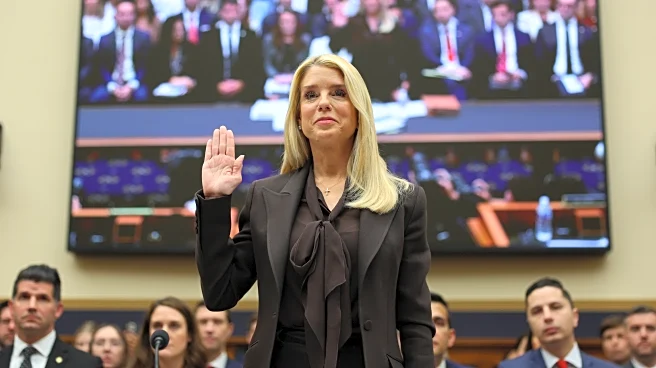
Members of Congress have expressed strong disapproval of the Department of Justice (DOJ) for allegedly monitoring the search activities of lawmakers reviewing unredacted Jeffrey Epstein files. During a House
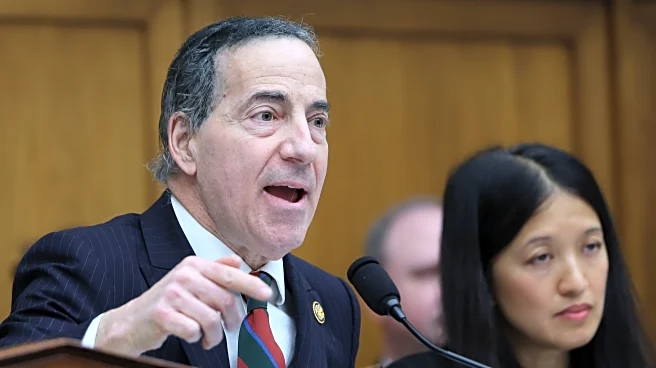
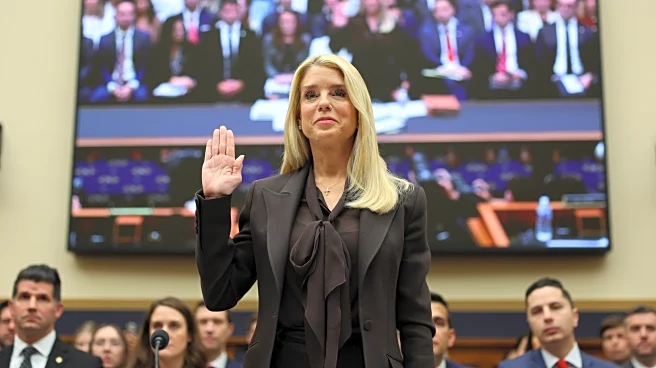
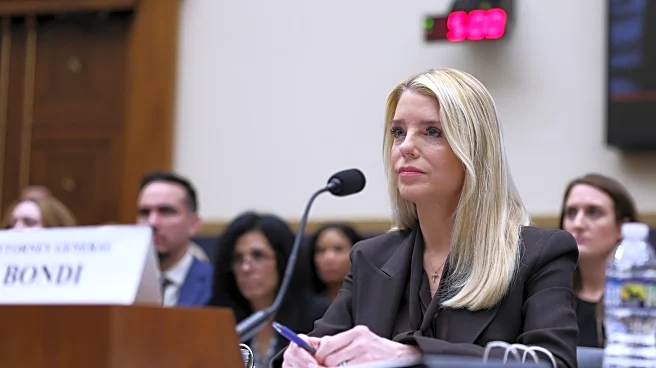
Judiciary Committee hearing, Attorney General Pam Bondi was seen holding a document labeled 'Jayapal Pramila Search History,' which detailed the search activities of Representative Pramila Jayapal. The DOJ had recently allowed lawmakers to access these files on DOJ computers, stating in a letter that it would log the dates and times of all members' reviews. This action has sparked outrage among lawmakers, who view it as an infringement on their oversight duties. Representative Jayapal and other lawmakers, including House Speaker Mike Johnson, have voiced their concerns, demanding an end to what they perceive as surveillance. The issue has garnered bipartisan agreement on the need for unobstructed access to the files without DOJ monitoring.
Why It's Important?
The controversy surrounding the DOJ's tracking of lawmakers' search activities on Epstein files raises significant concerns about the separation of powers and the integrity of congressional oversight. This incident highlights potential overreach by the DOJ, which could undermine trust between the legislative and executive branches. The ability of Congress to conduct oversight without interference is crucial for maintaining checks and balances within the U.S. government. If the DOJ's actions are perceived as an attempt to intimidate or surveil lawmakers, it could lead to broader implications for how government agencies interact with elected officials. The bipartisan response suggests a unified stance against perceived encroachments on legislative authority, which could influence future interactions between Congress and the DOJ.
What's Next?
Lawmakers are expected to continue pressing the DOJ to cease tracking their search activities related to the Epstein files. Representative Jayapal has indicated plans to pursue the matter further, potentially leading to formal inquiries or legislative actions to safeguard congressional oversight processes. House Speaker Mike Johnson has echoed concerns about the appropriateness of tracking lawmakers' searches, suggesting that he will communicate these concerns to the DOJ. Additionally, Representative Jamie Raskin has called for the DOJ's inspector general to investigate the matter, which could result in official findings and recommendations. The ongoing dialogue between Congress and the DOJ may lead to changes in how sensitive information is accessed and monitored by government officials.