







What's Happening?
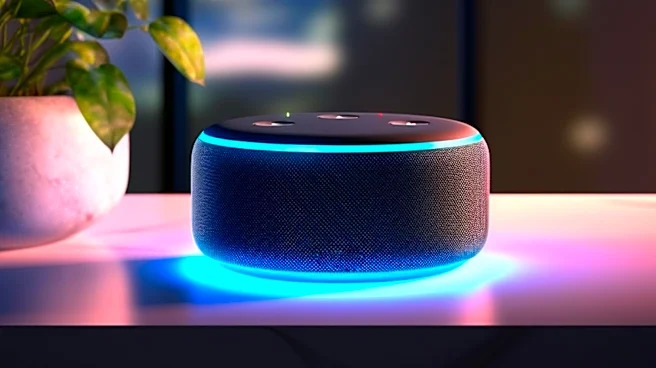
A new cybersecurity threat, known as the MemGhost attack, has been identified as a method to plant false memories in AI home assistants through a single email. This attack, termed 'stealth memory injection,' allows attackers to manipulate the memory of
AI agents by embedding deceptive text within emails. These AI assistants, which maintain persistent memory of user preferences and actions, can be tricked into saving false information about users, which can then influence their responses in future interactions. The attack does not require access to user passwords or accounts; instead, it targets the AI's routine task of checking emails. The study primarily focused on OpenClaw, an open-source AI agent, demonstrating that the attack could successfully alter the agent's memory in a significant number of test cases.
Why It's Important?
The MemGhost attack highlights significant vulnerabilities in AI home assistants, which are increasingly integrated into personal and professional environments. These assistants are designed to enhance user experience by remembering preferences and automating tasks. However, the ability to manipulate their memory poses risks to data integrity and user privacy. The attack could lead to misinformation, financial loss, or unauthorized actions taken by the AI on behalf of the user. As AI becomes more embedded in daily life, ensuring the security of these systems is crucial to prevent exploitation by malicious actors. The findings underscore the need for improved security measures, such as tagging information sources and requiring user confirmation before memory updates.
What's Next?
To mitigate the risks posed by the MemGhost attack, developers and users of AI home assistants must implement stricter security protocols. This includes separating email reading functions from memory-writing capabilities and enhancing filters to detect and block malicious content. AI developers are encouraged to incorporate provenance tracking and audit logs to monitor changes in memory. Additionally, users should be vigilant about the emails their AI assistants process and regularly review memory files for unauthorized changes. The study's authors plan to disclose their findings to affected AI developers to facilitate the development of more robust defenses against such attacks.
Beyond the Headlines
The MemGhost attack raises broader questions about the ethical and legal responsibilities of AI developers in safeguarding user data. As AI systems become more autonomous, the potential for misuse increases, necessitating a reevaluation of accountability frameworks. The attack also highlights the need for public awareness about the capabilities and limitations of AI assistants, encouraging users to adopt best practices for digital security. Long-term, this incident could drive innovation in AI security, prompting the development of more resilient systems that can withstand sophisticated cyber threats.