








What's Happening?
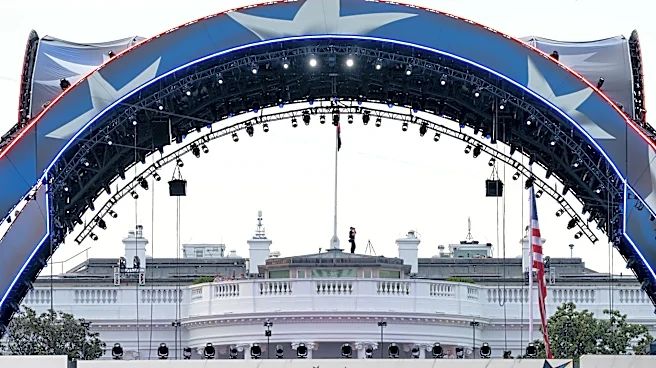
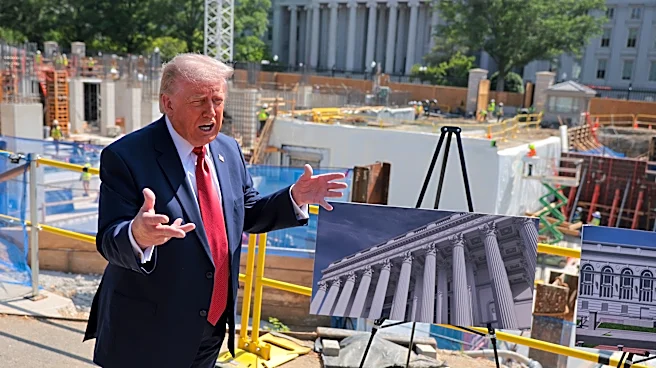
President Donald Trump's planned White House ballroom has been revealed to cost $600 million, with taxpayers expected to cover more than half of the expenses. Despite Trump's previous assurances that the project would not cost taxpayers a cent, leaked
records indicate that the financial burden is significant. An internal summary prepared by contractor Clark Construction, obtained by the Washington Post, shows that just under $300 million is expected to come from private sources, while the remaining costs are to be covered by taxpayers. This includes $155 million from the Secret Service, $149 million from the White House Military Office, and $3 million from the Executive Residence. The project has faced criticism from preservationists and ethics watchdogs, and Congress has blocked public funding for the ballroom.
Why It's Important?
The financial implications of the White House ballroom project are significant, as it highlights the potential misuse of taxpayer funds and raises questions about transparency and accountability in government spending. The involvement of the Secret Service in covering demolition costs has been particularly controversial, as it stretches the agency's protective mission. The project has also sparked political debate, with some members of Congress opposing the use of public funds for what they see as an unnecessary expenditure. This situation underscores the importance of oversight in government projects and the need for clear communication with the public regarding the use of taxpayer money.
What's Next?
The project is currently facing legal challenges, with a judge having paused above-ground work following a lawsuit from a preservation group. However, underground work continues as part of efforts to build a secure bunker beneath the structure. The administration has labeled the rebuild a security priority, especially after an apparent attempt on the president's life. The outcome of the legal proceedings and the administration's next steps will be closely watched, as they will determine the future of the project and its financial implications.