









What's Happening?
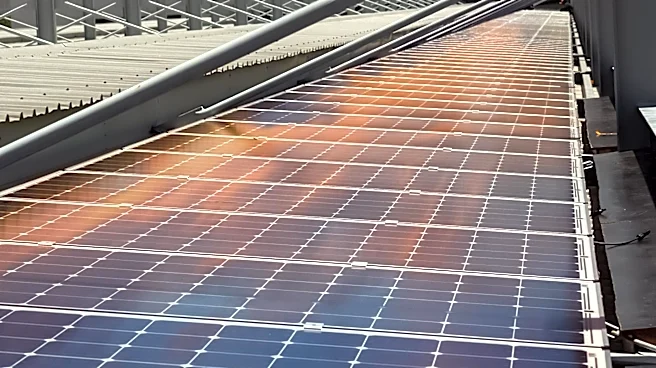
The World Bank's Board of Executive Directors has approved a significant financing package to accelerate India's national solar rooftop program. This initiative aims to bring clean energy to millions of homes and create approximately 1.7 million job opportunities
across the renewable energy sector. India has set ambitious goals to achieve 'net zero' emissions by 2070 and to increase its non-fossil-fuel-based energy resources to 60% of its electricity mix by 2035. Despite the rapid growth of large-scale solar projects, residential solar adoption has been limited. To address this, the Indian government launched the 'PM Surya Ghar: Muft Bijli Yojana' program, which incentivizes solar rooftop installations for 10 million rural and urban households. The World Bank's support includes an $820 million loan from the International Bank for Reconstruction and Development (IBRD), a $60 million concessional loan from the Clean Technology Fund, and a $10 million grant from IBRD's Livable Planet Fund. Additionally, the World Bank will mobilize $4.2 billion in private financing to facilitate the installation of solar rooftops.
Why It's Important?
This financing initiative is crucial for India's transition to renewable energy, which is a key component of its climate change mitigation strategy. By promoting residential solar adoption, the program not only aims to reduce household electricity costs but also supports local manufacturing of solar equipment, thereby boosting the domestic economy. The creation of 1.7 million jobs across the renewable energy value chain is expected to have a significant positive impact on employment. Furthermore, the program's focus on removing financial barriers and building capacity among distribution companies, banks, and vendors is likely to transform the residential solar market in India. This development aligns with global efforts to increase the use of clean energy and reduce reliance on fossil fuels.