

What's Happening?
Members of President Trump’s Cabinet are actively touring the United States to engage with citizens and promote the administration's 'America First' agenda and its perceived successes. These visits cover a range of policy areas, including energy dominance,
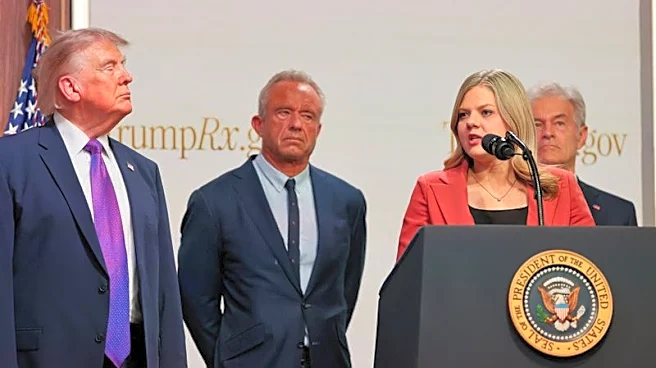
infrastructure modernization, manufacturing growth, veterans' care, and border security. For instance, U.S. Health and Human Services Secretary Robert F. Kennedy Jr. announced a $102 million investment in rural healthcare centers in Atwater, California, and promoted a new presidential fitness test for youth in Iowa. Energy Secretary Chris Wright celebrated the booming oil and gas industry in the Permian Basin, while Transportation Secretary Sean Duffy announced infrastructure funding for Tampa's port, ferry, and airport. Other cabinet members, including Interior Secretary Doug Burgum, Small Business Administration chief Kelly Loeffler, Commerce Secretary Howard Lutnick, Homeland Security Secretary Markwayne Mullin, Acting Labor Secretary Keith Sonderling, Agriculture Secretary Brooke Rollins, Treasury Secretary Scott Bessent, Defense Secretary Pete Hegseth, and Education Secretary Linda McMahon, have also conducted visits to highlight specific achievements and policies in their respective departments.
Why It's Important?
These nationwide tours by President Trump's Cabinet members are significant as they serve to directly communicate the administration's policy achievements and priorities to the American public, bypassing traditional media filters. This strategy aims to reinforce the 'America First' narrative and build support for the administration's agenda, particularly in key states and regions. The focus on tangible investments and programs, such as rural healthcare funding, energy sector growth, and infrastructure upgrades, directly impacts local communities and industries. By showcasing these successes, the administration seeks to demonstrate the real-world benefits of its policies, potentially influencing public opinion and voter sentiment. The visits also provide opportunities for cabinet secretaries to interact with local leaders, businesses, and citizens, fostering a direct connection and addressing specific regional concerns, which is crucial for maintaining political momentum and support.
What's Next?
These cabinet tours are likely to continue as the administration seeks to solidify its policy legacy and garner public support. The ongoing engagement with various communities across the U.S. will likely involve further announcements of investments, policy initiatives, and partnerships. The administration will continue to use these platforms to highlight specific achievements and frame them within the broader 'America First' agenda. These efforts are expected to intensify as political cycles progress, aiming to influence upcoming elections and policy debates. The impact of these visits will be measured by public reception, media coverage, and ultimately, their effect on policy implementation and political outcomes. The administration will likely monitor the effectiveness of these direct communication strategies in shaping public perception and mobilizing support for its initiatives.
Beyond the Headlines
Beyond the immediate policy announcements, these cabinet tours represent a strategic effort to shape the national discourse and define the administration's legacy. By emphasizing 'America First' successes, the administration is not only promoting its policies but also attempting to reframe the narrative around national priorities, economic development, and global engagement. The direct engagement with local communities can foster a sense of connection and responsiveness, potentially bridging divides between federal policy-making and local realities. However, these tours also raise questions about the balance between official government functions and political campaigning, especially as they highlight the achievements of a specific administration. The sustained focus on domestic issues and economic nationalism through these visits could have long-term implications for U.S. trade policy, international relations, and the role of government in economic development, potentially influencing future political platforms and public expectations.