



What's Happening?
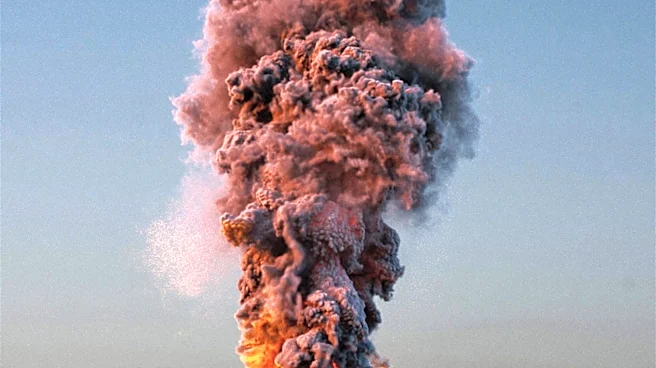
Mount Dukono, located in the Indonesian province of North Maluku, experienced an eruption on November 17, 2026. The eruption sent an ash column approximately 300 meters above its summit. According to Bambang Sugiono, an observer at the Dukono Volcano
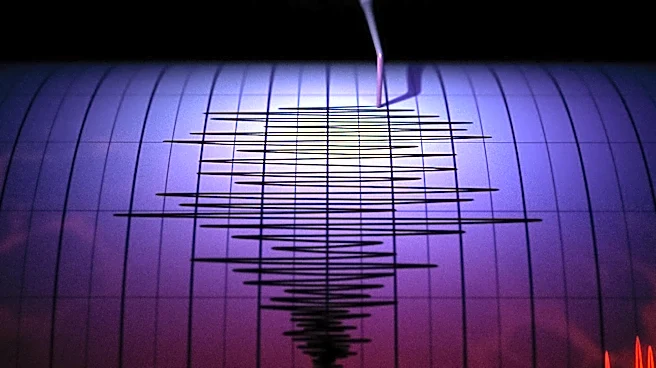
Monitoring Post, the event registered an amplitude of 30 millimeters and lasted for 44.91 seconds. Visual observations indicated thick white and gray crater emissions under weak to moderate pressure, with smoke rising between 900 to 1,000 meters above the crater rim. Seismic monitoring recorded seven low-frequency earthquakes and three distant tectonic earthquakes, alongside continuous tremor measuring one to three millimeters, predominantly at one millimeter. Mount Dukono remains at Level II (Advisory) status.
Why It's Important?
The eruption of Mount Dukono, while not directly impacting the U.S. mainland, highlights the ongoing geological activity in the Pacific Ring of Fire, a region known for frequent seismic and volcanic events. Indonesia, situated within this zone, regularly experiences such occurrences. These events can have broader implications, including disruptions to international air travel due to ash clouds, which can affect global supply chains and tourism. Volcanic ash can also impact climate patterns on a regional scale, potentially influencing weather systems that could indirectly affect other parts of the world. For U.S. citizens traveling or residing in the region, such eruptions necessitate adherence to local safety advisories and can pose health risks from ash inhalation.
What's Next?
Authorities have urged residents, visitors, and tourists to avoid all activities, including hiking, within four kilometers of the Malupang Warirang Crater. Residents are also advised to keep masks or face coverings available to protect against volcanic ash, which can be carried by winds in varying directions and speeds. The Center for Volcanology and Geological Hazard Mitigation (PVMBG) will continue to monitor Mount Dukono's activity, and residents are encouraged to follow their safety recommendations and updates. The ongoing Level II (Advisory) status suggests that further activity, though not necessarily a major eruption, is possible, requiring continued vigilance and preparedness from the local population.
Beyond the Headlines
The periodic eruptions of volcanoes like Mount Dukono underscore the constant interplay between human populations and natural geological forces. Beyond the immediate physical dangers, these events often lead to long-term environmental and socio-economic challenges for affected communities, including agricultural damage, displacement, and health issues. The reliance on early warning systems and public education becomes paramount in mitigating risks. Furthermore, the scientific data collected from such eruptions contributes to a global understanding of volcanic processes, aiding in the development of more effective prediction models and disaster preparedness strategies worldwide, including for U.S. scientific agencies monitoring similar hazards.