




What's Happening?
In Venezuela, the aftermath of two powerful earthquakes has become a significant political challenge for acting President Delcy Rodríguez. As her interim leadership term ends, Rodríguez is under pressure to manage the humanitarian crisis effectively.
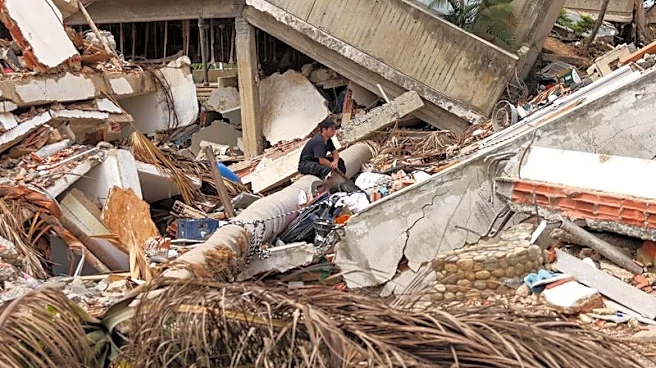
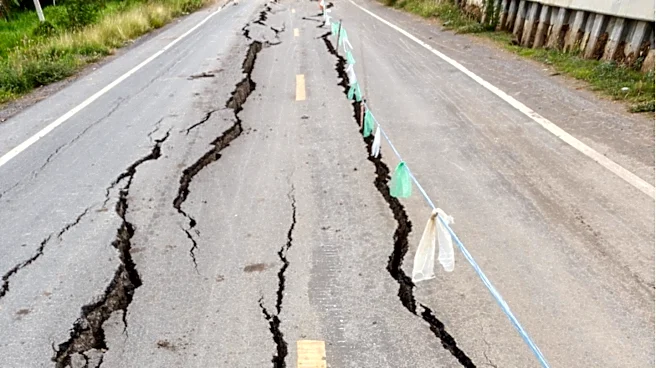
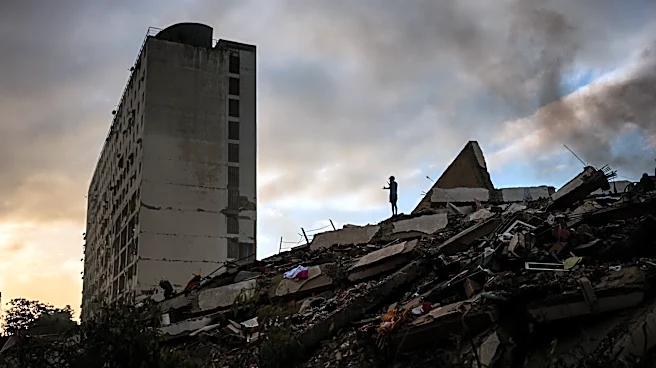
The earthquakes, which occurred on June 24, have resulted in over 2,645 deaths and more than 12,500 injuries. Opposition leader María Corina Machado, currently in exile, has criticized the government's response as inadequate and disorganized. Machado, who was barred from the 2024 presidential election, is advocating for her return to Venezuela to aid in the transition process, citing the government's failure to manage the crisis. Meanwhile, the Trump administration has expressed support for Rodríguez, praising her economic reforms, and has discouraged Machado from returning, fearing it could lead to political unrest.
Why It's Important?
The situation in Venezuela highlights the intersection of natural disasters and political instability. The government's response to the earthquakes is under scrutiny, with criticisms of inefficiency potentially undermining Rodríguez's leadership. The Trump administration's backing of Rodríguez underscores the geopolitical interests at play, particularly concerning Venezuela's oil sector. Machado's potential return could shift the political landscape, challenging Rodríguez's authority and possibly leading to increased tensions. The international community's involvement, including pledges of aid, reflects the broader humanitarian implications, as the country struggles to prevent a full-blown crisis amid damaged infrastructure and the risk of disease outbreaks.
What's Next?
As Rodríguez's mandate expires, the Venezuelan National Assembly faces a decision on whether to extend her interim leadership or call for a snap election. The political dynamics could shift significantly if Machado returns, potentially leading to protests and demands for political change. The focus remains on earthquake recovery, with international aid crucial in addressing immediate needs and preventing further humanitarian deterioration. The situation could influence U.S.-Venezuela relations, particularly if political instability affects the country's oil production and economic reforms.
Beyond the Headlines
The crisis in Venezuela raises questions about governance and accountability in disaster response. The political implications of the earthquakes could lead to long-term shifts in leadership and policy, affecting not only Venezuela but also regional stability. The role of international actors, including the U.S., highlights the complexities of foreign influence in domestic affairs. The situation also underscores the challenges of managing natural disasters in politically volatile environments, where effective governance is critical to mitigating human suffering.