





What's Happening?
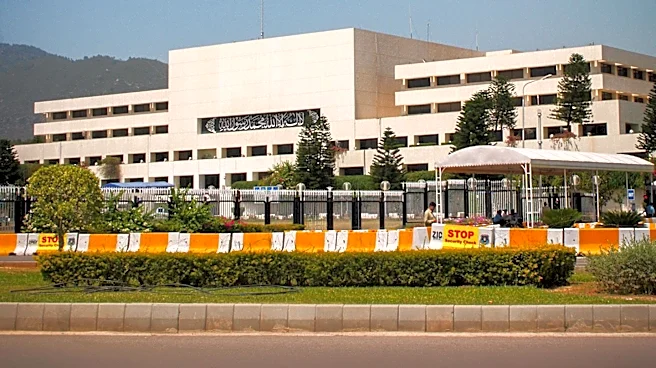
Pakistan's Petroleum Division has released official figures detailing the nation's remaining recoverable oil and gas reserves. According to data presented in the National Assembly, Pakistan's 10 major gas fields hold 10.605 trillion cubic feet (TCF) of remaining recoverable reserves,
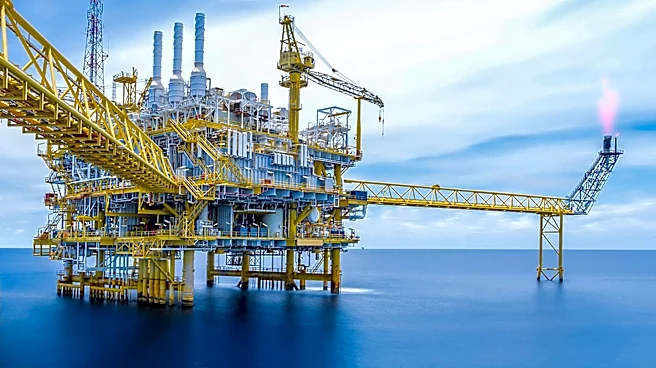
while its 10 largest oil fields contain an estimated 105 million barrels. These figures highlight the country's existing hydrocarbon potential. The 10 major gas fields originally held 43.358 TCF, with 32.753 TCF already extracted by June 30, 2026. Similarly, the 10 major oil fields had original recoverable reserves of 567 million barrels, of which 462 million barrels have been produced. Bargzai in Kohat district leads with 49 million barrels of remaining recoverable oil reserves, and Mari HRL in Ghotki district holds the largest remaining gas reserves at 2.777 TCF. The government is actively pursuing measures to enhance domestic exploration and production.
Why It's Important?
The disclosure of Pakistan's remaining oil and gas reserves is crucial for its energy security and economic planning. With significant quantities of hydrocarbons still available, the country can potentially reduce its reliance on energy imports, thereby saving foreign exchange and stabilizing its economy. Increased domestic production could also lead to job creation in the energy sector and related industries. For international energy companies, these figures signal potential investment opportunities in Pakistan's exploration and production landscape. The government's proactive approach to boosting exploration, including recent bidding rounds and policy amendments, aims to attract foreign investment and technology, which are vital for developing these reserves. The success of these initiatives will directly impact Pakistan's industrial growth and its ability to meet growing energy demands.
What's Next?
To bolster domestic hydrocarbon supplies and counter the decline in indigenous production, the Petroleum Division has outlined a series of policy and exploration measures. An offshore exploration bidding round was conducted in October 2026, leading to the award of 23 exploration blocks to local and international oil and gas companies. Additionally, five onshore bidding rounds over the past three years have resulted in the award of 46 blocks. A comprehensive high-resolution basin study is underway to identify new prospects. Policy changes, such as the Tight Gas Policy 2024 and amendments to the Petroleum Policy 2012, offer incentives for exploration and production companies. These measures are expected to encourage further investment and accelerate the development of new reserves, with the goal of increasing oil and gas output in the coming years.
Beyond the Headlines
The strategic importance of these reserves extends beyond immediate energy needs. Developing these resources could significantly enhance Pakistan's geopolitical standing, particularly in regional energy markets. The government's efforts to create a more attractive investment climate for hydrocarbon exploration could also serve as a model for other developing nations seeking to leverage their natural resources. However, the long-term sustainability of such initiatives will depend on consistent policy implementation, environmental considerations, and the ability to manage potential social impacts. The focus on domestic production also aligns with global trends of energy independence, but it must be balanced with the transition to cleaner energy sources to meet future climate goals.