



What's Happening?
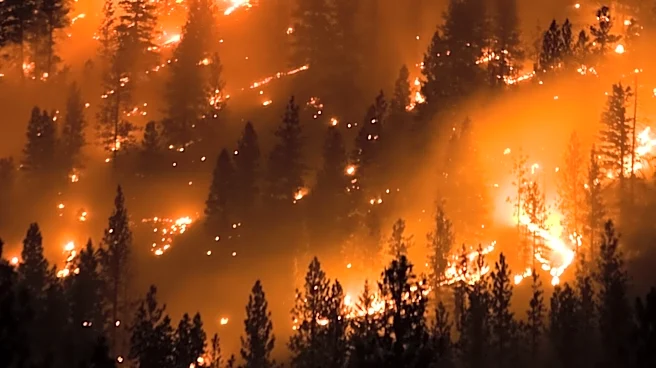
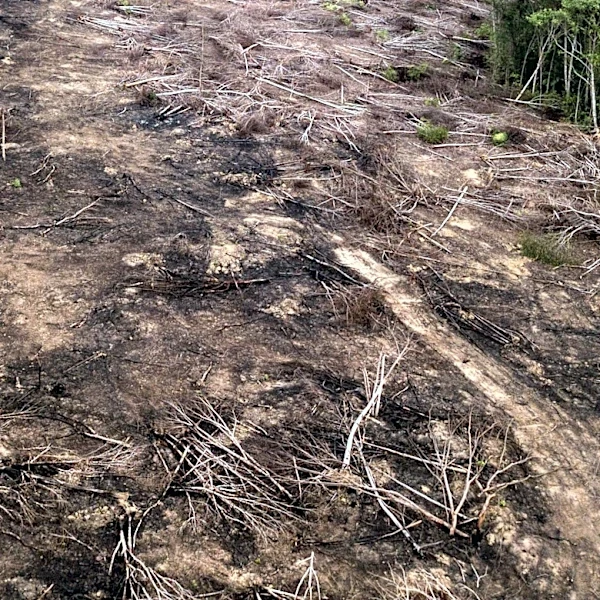
Wildfires are increasingly threatening water supplies across the U.S., with new studies indicating that contamination from these events can persist for over a decade. The charred trees and scorched vegetation left behind by fires impact streams and rivers
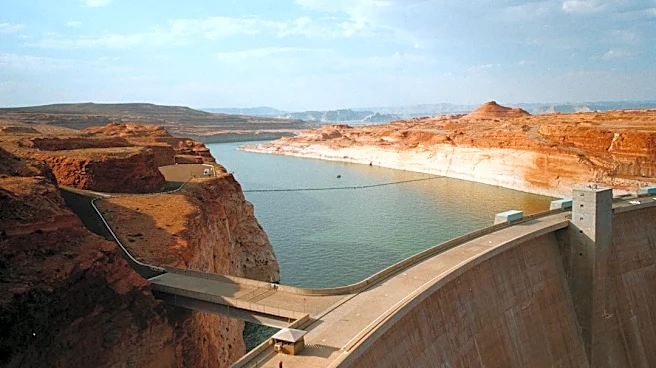
that serve as drinking water sources for much of the country. After a wildfire, rains carry ash and organic matter into these water sources, overwhelming treatment plants not designed to handle such pollutants. For instance, Las Vegas, New Mexico, experienced severe water contamination after the Hermit's Peak/Calf Canyon fire in 2022, leading to plant shutdowns and reliance on bottled water and water shipments. Subsequent floods in 2024 further exacerbated the issue, carrying more debris into reservoirs. Utilities are now seeking expert advice on alternative water sources and advanced treatment methods to cope with spikes in heavy metals and dissolved organic matter.
Why It's Important?
The long-term contamination of water supplies by wildfires presents a significant public health and infrastructure challenge for the U.S. As climate change contributes to larger and more frequent wildfires, the reliability of drinking water sources is increasingly at risk. Water treatment facilities face immense operational difficulties and financial burdens in adapting to these new contaminants, which can include heavy metals and dissolved organic matter that react with disinfectants to form harmful byproducts. The economic impact on affected communities is substantial, as seen in Las Vegas, New Mexico, where businesses closed and residents faced prolonged water shortages. This issue necessitates substantial investment in water infrastructure upgrades, watershed management, and fire prevention strategies to ensure safe and consistent water access.
What's Next?
Communities across the U.S. are working to adapt to the ongoing threat of wildfire-related water contamination. This includes exploring new water sources, such as drilling wells, and investing in advanced water treatment technologies. For example, Las Vegas, New Mexico, is slated to begin construction on a new water treatment plant. Utilities will continue to consult with experts to develop strategies for managing increased organic matter and other pollutants in their water systems. There will likely be a continued push for federal and state funding to support these costly infrastructure improvements and for more comprehensive watershed protection plans to mitigate the impact of future wildfires on water quality.
Beyond the Headlines
The persistent contamination of water supplies post-wildfire highlights a critical intersection of climate change, public health, and environmental justice. Vulnerable communities, often with older infrastructure, may bear a disproportionate burden of these impacts. The challenge extends beyond immediate treatment to long-term ecological recovery of watersheds, which can take decades. This situation also underscores the need for integrated land management practices that consider the downstream effects of forest health and fire regimes on water resources. The formation of disinfection byproducts due to increased organic matter also raises complex regulatory and public health questions regarding safe drinking water standards in a changing climate.