




What's Happening?
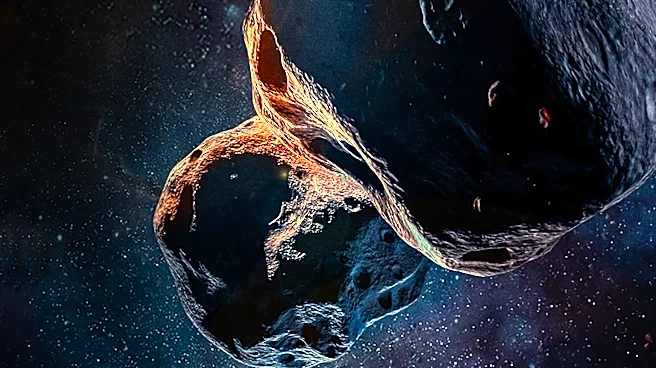
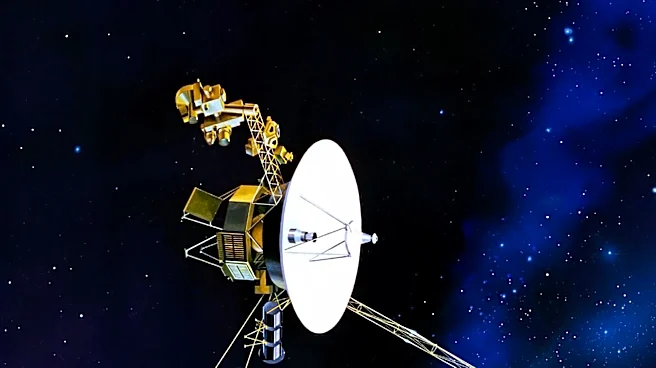
A Chinese spacecraft, Tianwen-2, has captured the first close-up image of Earth's quasi-moon, Kamo'oalewa. The mission aims to collect samples from the asteroid and return them to Earth. The image reveals the asteroid's small size and unstable surface,
complicating the planned sampling. The Chinese National Space Administration (CNSA) confirmed the probe's arrival at the asteroid after a 400-day journey. The mission's success could make China the third country to return asteroid samples to Earth. However, the asteroid's composition and fast spin present significant challenges for sample collection.
Why It's Important?
The Tianwen-2 mission represents a significant step in China's space exploration efforts. Successfully collecting and returning samples from Kamo'oalewa could provide valuable insights into the early solar system and the origins of key compounds on Earth. The mission also highlights the growing capabilities of China's space program and its potential to contribute to global scientific knowledge. The challenges faced by the mission underscore the complexities of space exploration and the need for advanced technologies and strategies.
What's Next?
The CNSA will continue to analyze data from the probe to determine the best approach for sample collection. If successful, the samples will be returned to Earth in 2027. The mission's findings could inform future asteroid exploration efforts and contribute to our understanding of quasi-moons. The probe will also embark on a secondary mission to study another celestial object, further expanding China's exploration capabilities.