





What's Happening?
Scientists at the University of Queensland have identified that the genetic makeup of a mungbean crop can dramatically influence the yield of a subsequent wheat crop, with variations of up to 45%. This finding, published in Nature Genetics and Plant Communications
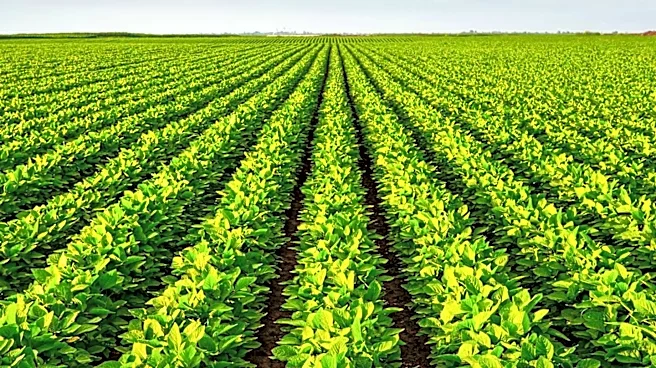
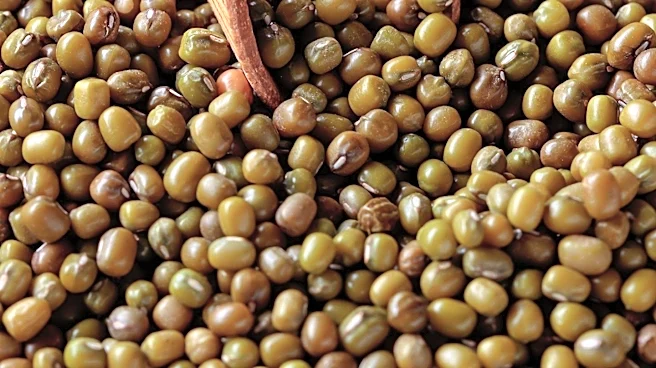
by a team led by Dr. Millicent Smith and Professor Lee Hickey, reveals that the 'genetic legacy effect'—the influence a crop leaves on soil nutrients, structure, water availability, and microbial communities—is under genetic control. To isolate this effect, researchers grew over 300 genetically diverse mungbean varieties, then planted a single, uniform wheat variety across all plots. The significant differences in wheat yield, solely attributable to the preceding mungbean variety, demonstrated that some mungbean genotypes could boost wheat yield by as much as 45%, while others reduced it by half. The team used genetic mapping to pinpoint specific regions of the mungbean genome responsible for these effects.
Why It's Important?
This discovery holds substantial importance for agricultural practices, particularly in regions relying on crop rotation, such as the Indo-Gangetic plains in India. Traditionally, crop breeding has focused on maximizing the yield of individual crops, overlooking their impact on subsequent crops in a rotation. The ability to breed mungbean varieties specifically for a positive legacy effect on wheat could revolutionize fertilizer management and reduce input costs for farmers. By enhancing soil health and nutrient availability through genetic selection, cereal growers could maintain or even increase yields with less reliance on synthetic fertilizers. This offers a genetics-based route to more sustainable and economically viable farming, complementing existing soil and nutrient management practices. The research suggests that this 'legacy-effect breeding logic' is applicable to other pulse-cereal rotations, potentially transforming agricultural productivity and environmental sustainability on a global scale.
What's Next?
The University of Queensland team is currently working to confirm whether the same genome regions driving legacy effects in mungbean have equivalents in other legume crops used in rotation systems worldwide, including canola-wheat and chickpea-barley rotations. The practical application of this research involves developing new breeding programs that screen diverse pulse germplasm ahead of a uniform cereal check crop. This will allow breeders to identify and eventually release pulse varieties specifically designed to benefit subsequent wheat or rice crops. Indian and other Asian pulse breeding programs and seed companies are encouraged to adopt this legacy-trait screening method. The ultimate goal is to provide farmers with crop varieties that not only perform well individually but also contribute to the long-term health and productivity of their farming systems, leading to reduced fertilizer dependence and improved environmental outcomes.
Beyond the Headlines
The concept of 'genetic legacy effects' opens up a new paradigm in agricultural science, moving beyond single-crop optimization to a more holistic, system-level approach to breeding. This research highlights the intricate biological interactions within agricultural ecosystems, particularly the role of plant genetics in shaping soil health and microbial communities. The potential to engineer crops that actively improve the soil for subsequent plantings could mitigate some of the environmental damage caused by intensive farming, such as soil degradation and nutrient runoff. However, it also raises questions about the complexity of managing such multi-trait breeding programs and the potential for unintended consequences if not carefully implemented. The long-term implications could include a shift towards more integrated and biologically-driven agricultural systems, where crop rotations are not just about pest and disease management but also about optimizing the genetic contributions of each crop to the overall health and productivity of the farm ecosystem.