










What's Happening?
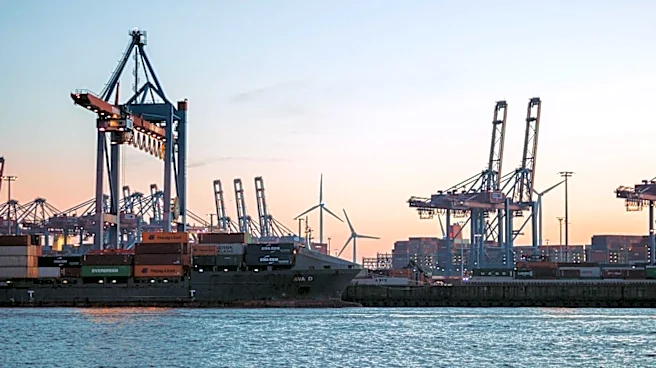
South Carolina Ports has announced a temporary suspension of operations at the Hugh K. Leatherman Port Terminal in Charleston, citing low container volumes and high operational costs. The terminal, which opened in March 2021, has struggled to reach its
capacity, handling less than 10% of its potential throughput in the first 11 months of the fiscal year. The decision to pause operations, effective August 1, aims to consolidate activities at the Wando Welch and North Charleston terminals, which have sufficient capacity to support short-term growth. The Leatherman terminal faced initial challenges due to a labor dispute with the International Longshoremen’s Association, which led to a 21-month closure until operations resumed in September 2024.
Why It's Important?
The suspension of operations at the Leatherman terminal highlights ongoing challenges in the U.S. maritime industry, particularly in maintaining cost competitiveness amid fluctuating trade volumes. This move reflects broader trends of declining container volumes at U.S. ports, as projected by the National Retail Federation, which anticipates flat growth through 2026. The decision impacts major shipping companies like MSC Mediterranean Shipping Company, which will need to relocate its operations. The consolidation strategy aims to optimize resources and maintain the port's competitive edge, but it also underscores the need for strategic adjustments in response to market conditions.
What's Next?
The South Carolina Ports Authority will focus on consolidating operations at its other terminals while monitoring market conditions. The temporary pause at Leatherman may lead to further strategic decisions regarding its future operations, especially if container volumes do not recover. Stakeholders, including shipping companies and labor unions, will likely engage in discussions to address operational and labor challenges. The port authority's ongoing construction projects, such as the second berth at Leatherman, will continue, with completion expected next year, potentially influencing future operational decisions.