






What's Happening?
Firefighters in Colorado urged residents near Arapahoe Road and Waco Street to close windows, turn off HVAC systems, and stay indoors following an electric vehicle fire. The incident, which occurred just after 7 a.m., involved a Tesla that caught fire after striking
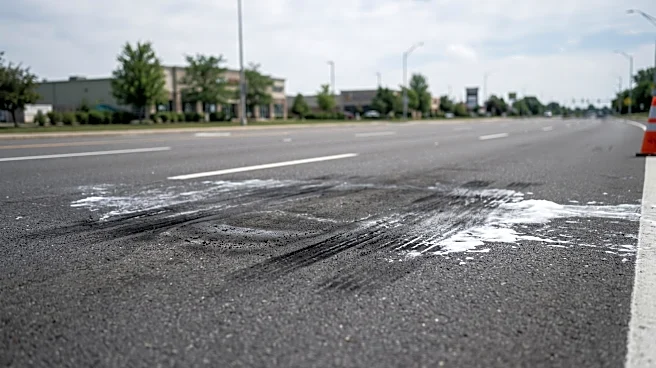
an abandoned tow hitch in the road. At least four vehicles hit the hitch, but only the Tesla ignited. South Metro Fire Rescue (SMFR) crews responded to the scene, and video posted by SMFR on X showed thick, black smoke emanating from the burning vehicle. The driver of the Tesla managed to escape without injury. Arapahoe Road was closed in both directions as crews worked to contain the fire and investigate the cause. The Arapahoe County Sheriff's Office utilized a drone as part of their investigation. Westbound lanes of Arapahoe Road reopened before 11 a.m., with eastbound lanes reopening after an inspection for road damage.
Why It's Important?
This incident highlights growing concerns regarding electric vehicle fires, particularly the nature of the smoke produced and the potential environmental and health impacts. The recommendation for residents to close windows and shut off HVAC systems underscores the hazardous components that can be released during such fires, which may differ from traditional gasoline vehicle fires. As electric vehicle adoption increases across the U.S., understanding and mitigating these specific risks becomes crucial for public safety and emergency response protocols. The event also points to the broader issue of road debris and its potential to cause significant accidents, including those involving newer vehicle technologies. The involvement of multiple agencies, including SMFR and the Arapahoe County Sheriff's Office, demonstrates the coordinated effort required to manage these types of incidents, which could become more frequent with the rise of EVs.
What's Next?
Authorities will likely continue their investigation into the specific chemical composition of the smoke emitted from the Tesla fire to better inform future public health advisories and emergency response procedures for electric vehicle fires. There may be increased public discourse and policy considerations regarding the safe disposal or management of road debris, such as abandoned tow hitches, to prevent similar incidents. Local and national fire departments may review and update their training and equipment to specifically address the unique challenges posed by electric vehicle fires, including specialized extinguishing agents and ventilation strategies. Furthermore, the incident could prompt vehicle manufacturers to explore enhanced safety features to prevent battery ignition upon impact or to contain fires more effectively. Public awareness campaigns about the safety precautions during EV fires might also be initiated.
Beyond the Headlines
The incident subtly underscores the evolving landscape of urban safety and infrastructure in response to technological advancements. The 'thick, black smoke' from the electric vehicle fire, while visually alarming, also raises questions about the long-term environmental and health implications of such emissions, particularly in densely populated areas. This could lead to a re-evaluation of urban planning and emergency service deployment strategies to account for the unique characteristics of electric vehicle incidents. Furthermore, the reliance on a drone for investigation points to the increasing integration of advanced technology in emergency response, offering new perspectives on incident assessment and management. The event also touches upon consumer safety and the durability of vehicle components against unexpected road hazards, potentially influencing future automotive design and road maintenance standards.