








What's Happening?
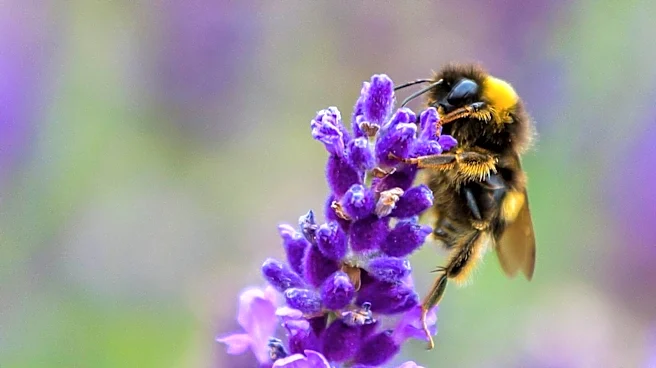
Researchers at the Georgia Institute of Technology have discovered that the pesticide sulfoxaflor, used to control crop pests, may be adversely affecting bumblebee reproduction. The study, funded by the U.S. Department of Agriculture, found that even
low doses of sulfoxaflor altered gene activity in bumblebees, particularly in ovarian tissues, potentially reducing offspring production. This finding is significant as bumblebees are crucial pollinators for about one-third of global food production. The research highlights the challenge of balancing pest control with the protection of beneficial insects like bees, which are already under threat from environmental stressors such as rising temperatures.
Why It's Important?
The implications of this study are significant for agriculture and food security. Bumblebees play a vital role in pollinating crops, and their decline could lead to reduced crop yields and increased food prices. The findings underscore the need for developing pest control methods that do not harm pollinators. Protecting bee populations is essential for maintaining biodiversity and ensuring the sustainability of food systems. The study also raises awareness about the broader environmental impacts of pesticides, prompting a reevaluation of their use in agriculture.
What's Next?
Future research may focus on developing alternative pest control strategies that minimize harm to pollinators. Policymakers and agricultural stakeholders might consider revising regulations on pesticide use to protect bee populations. Additionally, there could be increased investment in research to understand the full impact of pesticides on non-target species and to develop more sustainable agricultural practices.