


What's Happening?
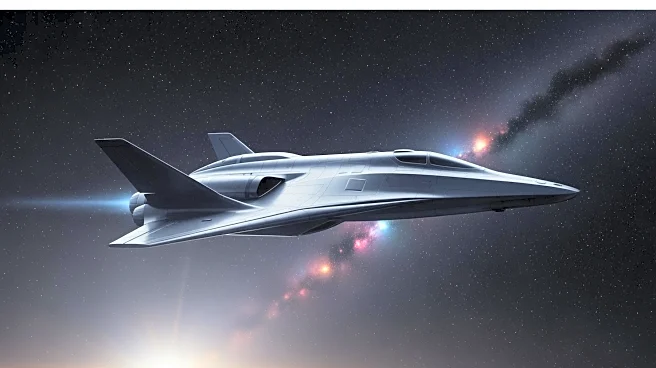
China has launched its experimental reusable spacecraft, Shenlong, for the fourth time since 2020. The mission, carried out by a Long March-2F carrier rocket from the Jiuquan Satellite Launch Centre, remains shrouded in secrecy, with the Chinese government
providing minimal details. Official reports suggest the mission aims to conduct 'technological verification' and support the peaceful use of space. The Shenlong program represents a significant advancement in China's orbital capabilities, focusing on long-duration missions and autonomous navigation systems. Despite comparisons to the U.S. Space Force's Boeing X-37B, the Shenlong's specific objectives and technical capabilities remain undisclosed.
Why It's Important?
The Shenlong spacecraft's development marks a critical step in China's space ambitions, potentially altering the balance of power in space exploration. By advancing reusable spacecraft technology, China could increase mission frequency and reduce costs, challenging the dominance of established space powers like the United States. The secrecy surrounding the mission raises concerns about potential military applications, including anti-satellite capabilities. As China continues to enhance its space technology, the international community may face increased competition and strategic challenges in space exploration and security.
What's Next?
Observers and experts will likely continue to monitor the Shenlong's activities through satellite tracking and amateur observations. Greater transparency from China regarding the mission's scientific goals could alleviate fears of military intentions. However, the ongoing secrecy suggests that China may continue to prioritize strategic advantages in space. The international community may respond by enhancing their own space capabilities and fostering collaborations to ensure space security and stability.
Beyond the Headlines
The Shenlong's ability to perform rendezvous and proximity operations (RPO) highlights China's focus on developing skills that could be used for both peaceful and military purposes. This dual-use capability underscores the need for international dialogue on space security and the establishment of norms to prevent the weaponization of space. As space becomes an increasingly contested domain, the ethical and strategic implications of such technologies will require careful consideration by global stakeholders.